Turkey is one of the most earthquake-prone countries in the world — and that’s not by accident.
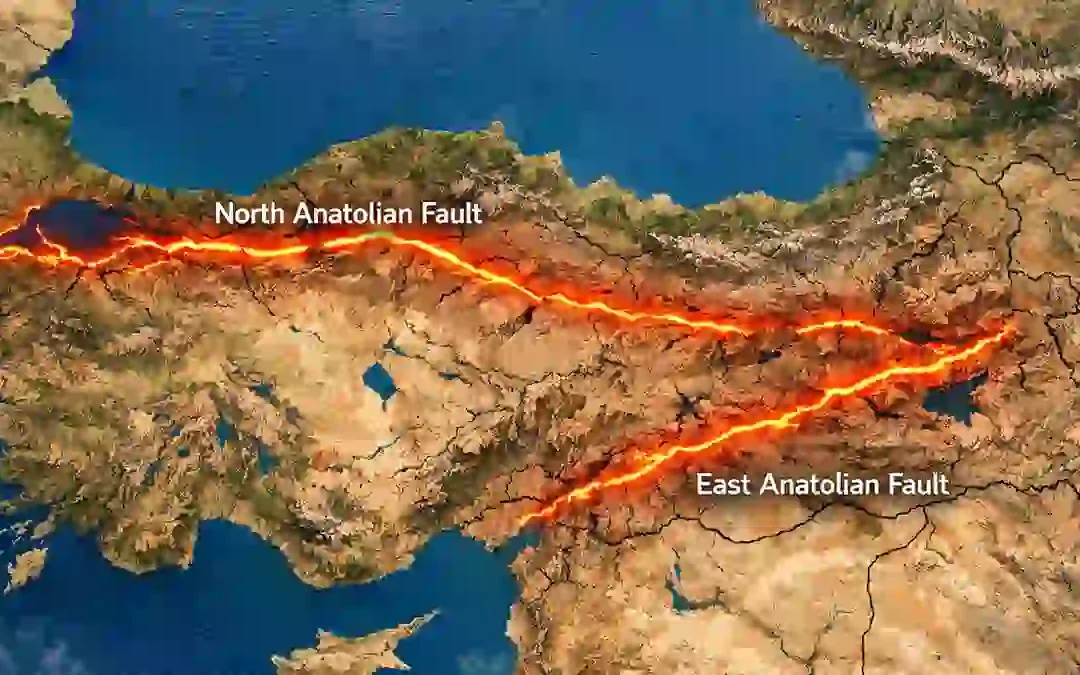
The country sits directly on several major fault systems where tectonic plates constantly push against each other. Over time, this pressure builds up and is suddenly released as earthquakes.
If you’re new to the topic, it helps to start from the basics — you can explore what is an earthquake to understand how these events begin.
Earthquake Risk Zones in Turkey (Quick Overview)
| Region | Risk Level | Main Cause |
|---|---|---|
| North Anatolian Fault Zone | Very High | Strike-slip fault movement |
| East Anatolian Fault Zone | Very High | Plate boundary interaction |
| Western Turkey (Aegean Region) | High | Crustal extension |
| Central Turkey | Moderate | Internal plate stress |
| Southeastern Turkey | High | Plate collision effects |
To understand how these fractures form, you can explore fault lines
Why Do Earthquakes Happen in Turkey?
Turkey’s earthquake activity is mainly caused by the movement of the Anatolian Plate, which is squeezed between larger tectonic plates.
In simple terms:
- The Arabian Plate pushes from the south
- The Eurasian Plate resists from the north
- The Anatolian Plate is forced to move sideways
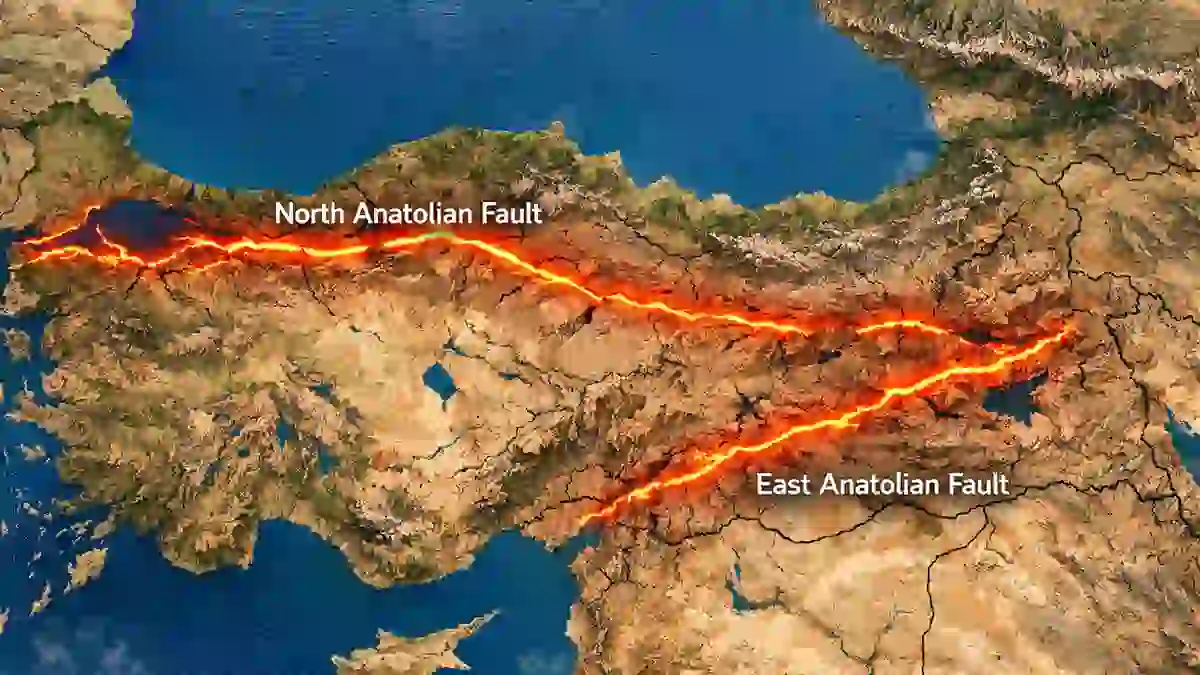
This creates intense stress along major fault lines like the North Anatolian Fault.
When this stress is released, earthquakes occur.
For a deeper explanation, see causes of earthquakes
Major Earthquake Zones in Turkey
North Anatolian Fault (Most Dangerous Zone)
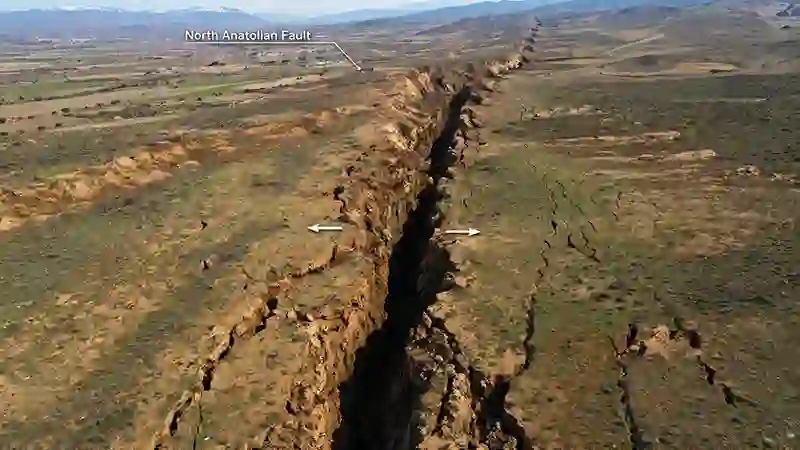
The North Anatolian Fault is one of the most active and dangerous fault systems in the world.
- Runs across northern Turkey
- Responsible for many major earthquakes
- Produces strong, shallow earthquakes
This type of movement is known as a strike-slip fault, where plates slide past each other.
You can learn more about this in types of earthquakes
East Anatolian Fault
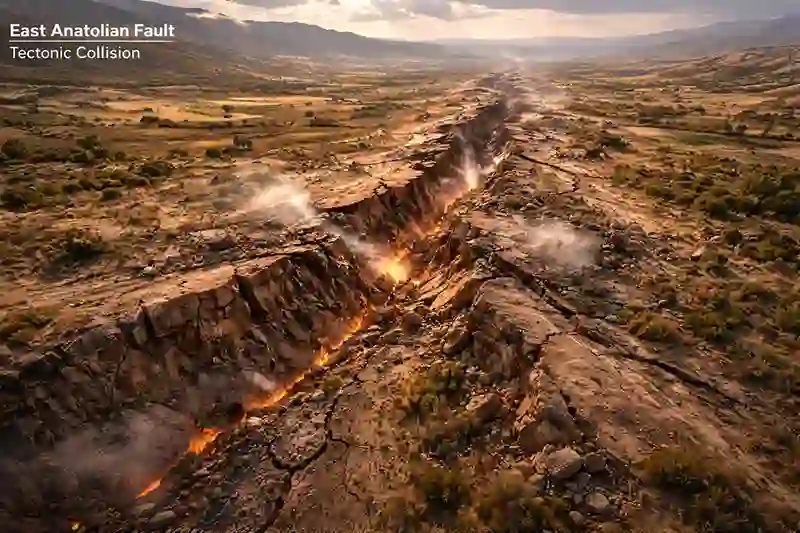
The East Anatolian Fault is another major seismic zone.
- Located in eastern Turkey
- Active plate boundary region
- Source of large earthquakes in recent years
This area shows how complex plate interactions can create powerful earthquakes.
Western Turkey (Aegean Region)
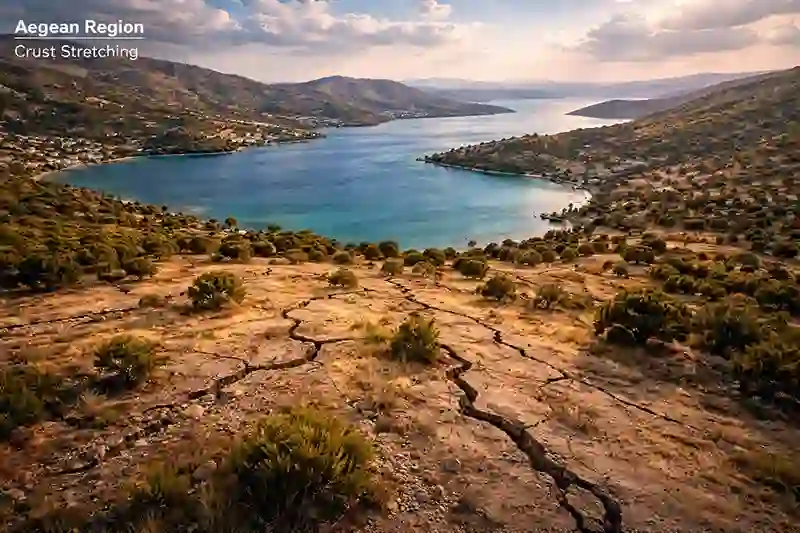
Western Turkey experiences earthquakes due to crustal stretching.
- Frequent moderate earthquakes
- Less intense than major fault zones
- Caused by extension rather than collision
Recent Earthquake Activity in Turkey
Turkey continues to experience frequent seismic activity.
In recent years:
- Several strong earthquakes have occurred along major faults
- Eastern and southeastern regions have seen significant events
- Aftershock sequences often last for weeks or months
These patterns show how active the region remains.
If you want to understand why earthquakes repeat in the same areas, see causes of earthquakes
Notable Earthquakes in Turkey
Looking at past earthquakes helps understand the risk.
- 1999 İzmit Earthquake (M7.6)
One of the most devastating earthquakes in Turkey, causing widespread damage. - 2011 Van Earthquake (M7.1)
A powerful earthquake in eastern Turkey that caused significant destruction. - 2023 Turkey–Syria Earthquake (M7.8)
A major event that highlighted the ongoing seismic risk in the region.
If you're unsure what these magnitudes mean, take a look at magnitude vs intensity
Turkey vs Other Earthquake Regions
Turkey’s earthquake pattern is different from other major regions.
- Turkey → dominated by large fault systems
- Japan → subduction zone earthquakes across the country
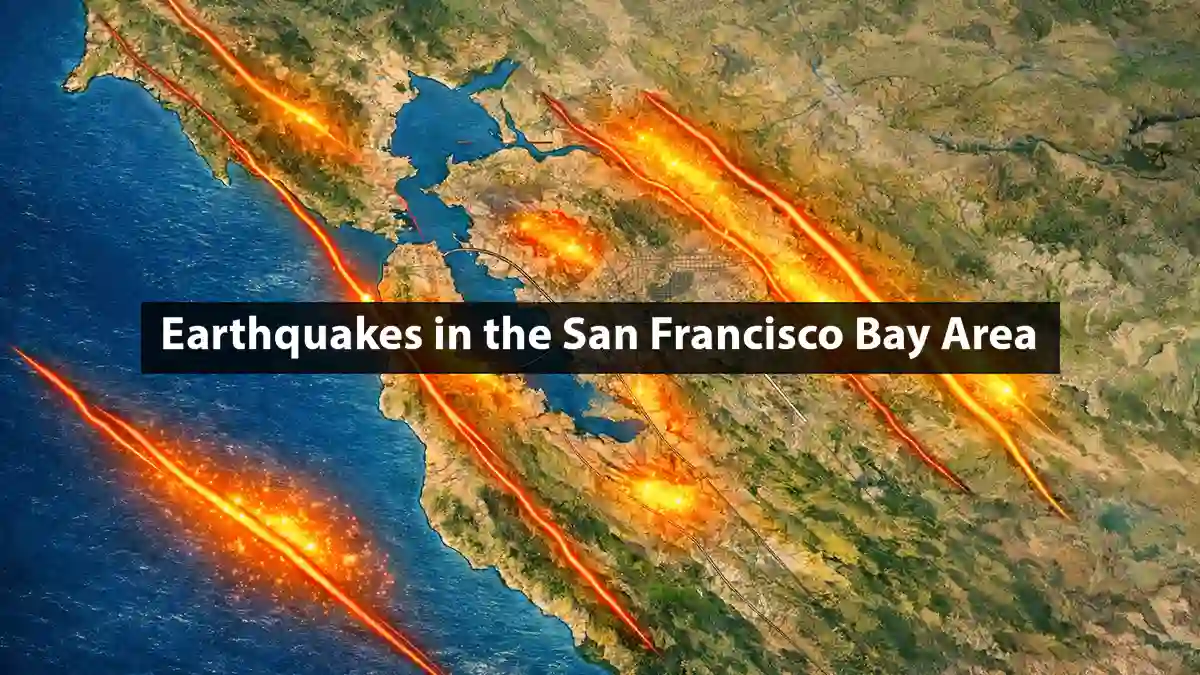
- California → fault-driven earthquakes like the San Andreas Fault
This makes Turkey one of the most active strike-slip earthquake regions in the world.
Can Earthquakes in Turkey Be Predicted?
No — earthquakes cannot be predicted precisely.
Scientists can:
- monitor fault activity
- identify high-risk zones
- estimate probabilities
But exact timing is still impossible.
You can explore this further in can earthquakes be predicted
Because it sits between major tectonic plates that constantly push and move.
The North Anatolian Fault.
Yes — especially along major fault zones.
Cities near major fault lines, including Istanbul and eastern regions.
Final Thoughts
Turkey’s location makes earthquakes unavoidable — but understanding the risks can help reduce their impact.
The more you learn about how earthquakes work, the easier it becomes to understand where and why they happen.