Indonesia is one of the most earthquake-prone countries on Earth — and it’s not a coincidence.
The country sits directly on the Pacific Ring of Fire, where several massive tectonic plates meet. This creates constant pressure beneath the surface, leading to frequent earthquakes.
If you’re new to earthquakes, it’s helpful to understand the basics first — you can explore what is an earthquake to get a clear foundation.
Earthquake Risk Zones in Indonesia (Quick Overview)
| Region | Risk Level | Main Cause |
|---|---|---|
| Sumatra | Very High | Subduction zone |
| Java | Very High | Plate boundary activity |
| Sulawesi | High | Complex fault systems |
| Papua | High | Tectonic plate interactions |
| Kalimantan (Borneo) | Low | Stable region |
To understand why these regions behave differently, you can explore fault lines
Why Do Earthquakes Happen in Indonesia?
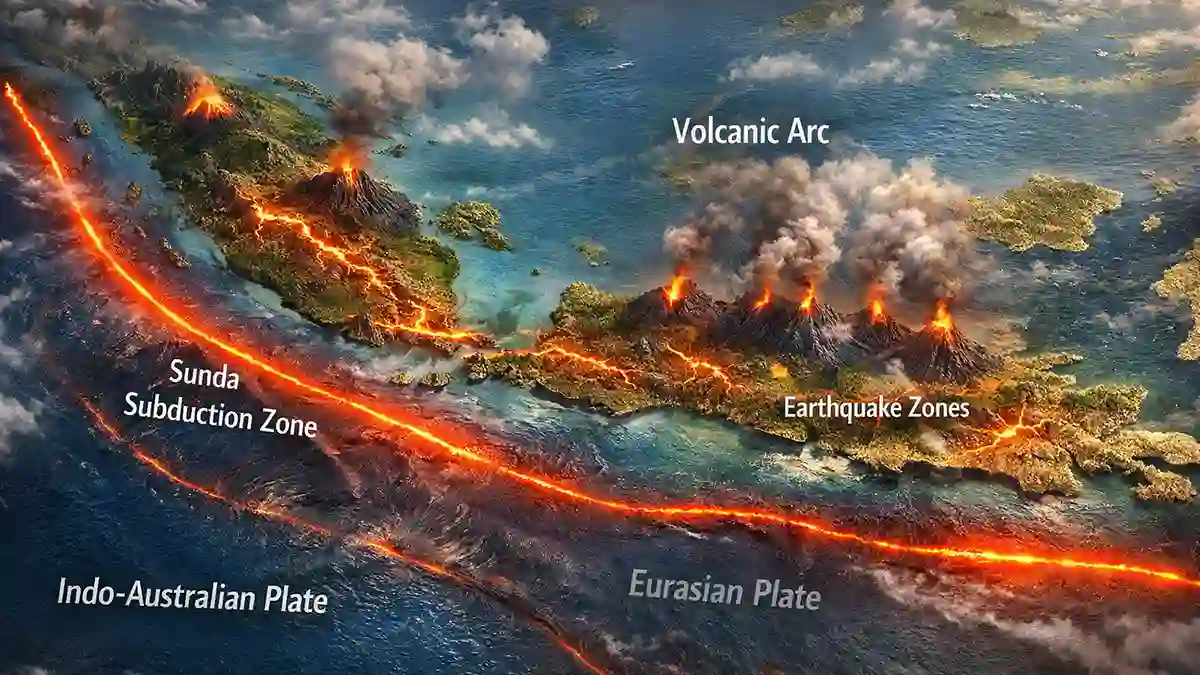
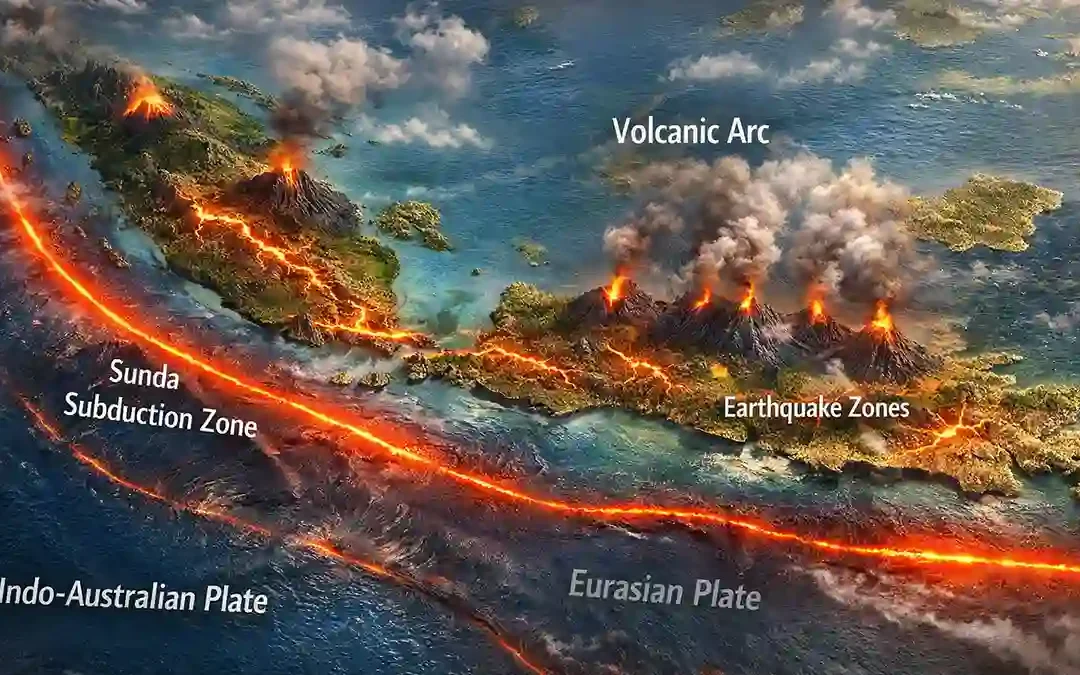
Indonesia’s earthquakes are mainly caused by the interaction of multiple tectonic plates.
In simple terms:
- The Indo-Australian Plate moves north
- The Eurasian Plate resists
- The Pacific Plate adds additional pressure
This creates powerful subduction zones, where one plate is forced beneath another.
These zones are known for producing some of the strongest earthquakes in the world.
Major Earthquake Zones in Indonesia
Sumatra Subduction Zone

The Sumatra region is one of the most active seismic zones in the world.
- Frequent large earthquakes
- Located along a major subduction zone
- High tsunami risk
This region is responsible for some of the most powerful earthquakes ever recorded.
You can explore this type further in types of earthquakes
Java & Southern Indonesia

Java and southern Indonesia also experience frequent earthquakes.
- Active volcanic arc
- Strong tectonic movement
- High population exposure
This makes earthquakes here particularly dangerous.
Sulawesi Fault Systems

Sulawesi has a more complex tectonic setting.
- Multiple interacting faults
- Irregular earthquake patterns
- Combination of different fault types
Recent Earthquake Activity in Indonesia
Indonesia experiences frequent earthquakes throughout the year.
In recent years:
- Strong earthquakes have occurred near Sumatra and Java
- Offshore earthquakes have triggered tsunami warnings
- Aftershocks often continue for extended periods
This constant activity reflects the country’s position on active tectonic boundaries.
If you want to understand why earthquakes repeat, you can explore causes of earthquakes
Notable Earthquakes in Indonesia
Real events show the scale of risk.
- 2004 Indian Ocean Earthquake (M9.1–9.3)
One of the most powerful earthquakes ever recorded, causing a devastating tsunami. - 2018 Sulawesi Earthquake (M7.5)
Triggered a tsunami and widespread damage. - 2006 Yogyakarta Earthquake (M6.3)
A shallow earthquake causing significant local destruction.
To understand how magnitude relates to impact, see magnitude vs intensity
Indonesia vs Other Earthquake Regions
Indonesia’s seismic activity is among the most intense globally.
- Indonesia → subduction zone earthquakes + volcanoes
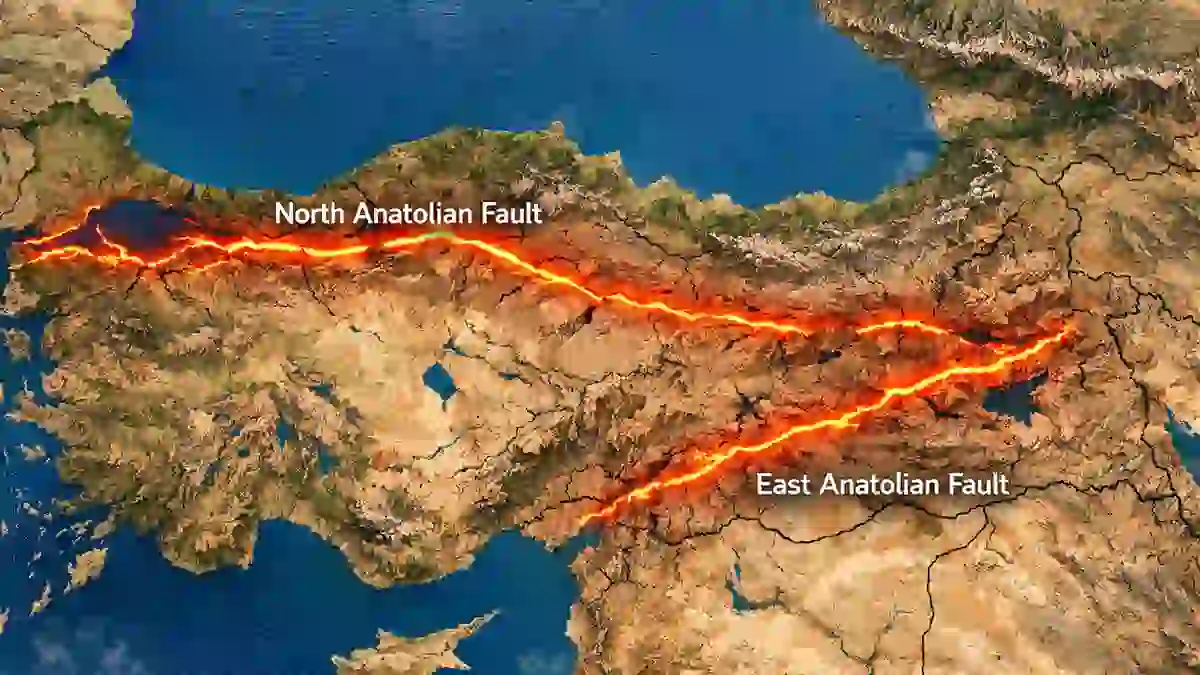
- Turkey → fault-driven earthquakes
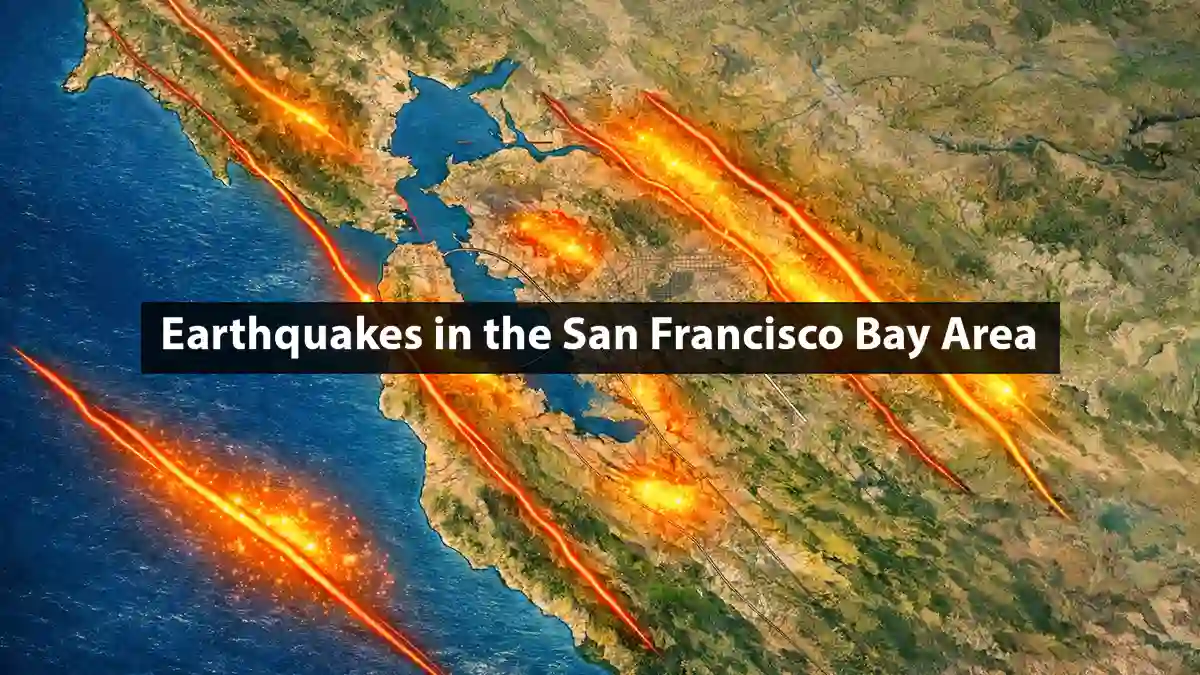
- California → transform fault systems like the San Andreas Fault
This combination makes Indonesia uniquely active.
Can Earthquakes in Indonesia Be Predicted?
No — earthquakes cannot be predicted with exact timing.
Scientists can:
- monitor seismic activity
- identify high-risk zones
- issue early warnings in some cases
But exact prediction is still not possible.
You can learn more in can earthquakes be predicted
Because it lies on the Pacific Ring of Fire where multiple tectonic plates meet.
Sumatra and Java are the most earthquake-prone regions.
Yes — earthquakes occur regularly due to active tectonic movement.
Yes — especially in subduction zones like Sumatra.
Final Thoughts
Indonesia shows how powerful Earth’s tectonic forces can be.
Earthquakes here are not rare events — they are part of a continuous geological process shaping the region.
Understanding these patterns helps explain not just Indonesia, but the global behavior of earthquakes.