
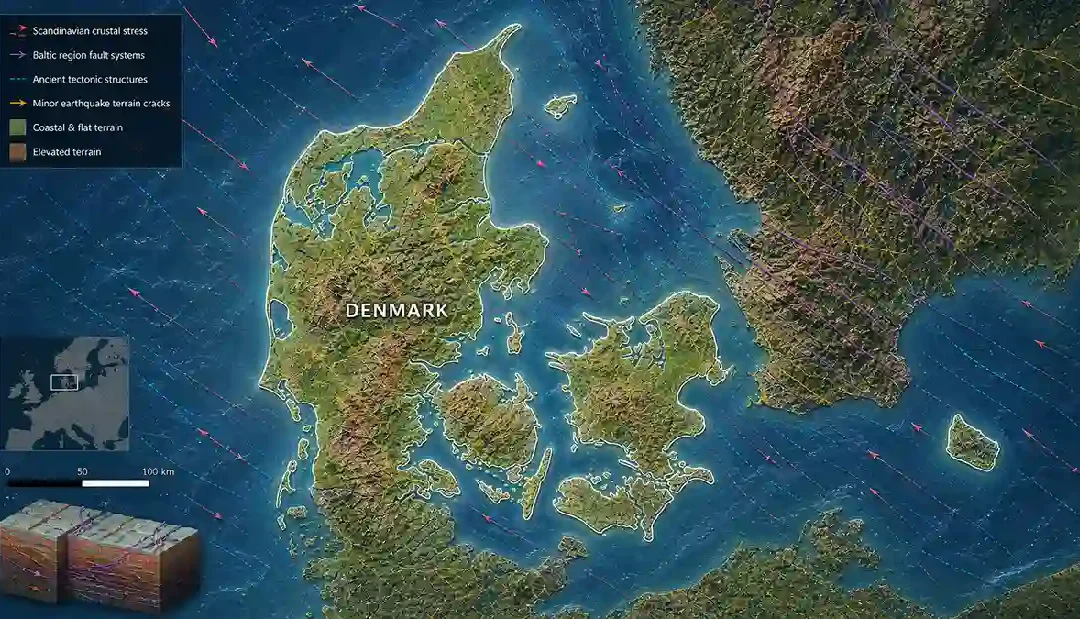
Denmark is one of Europe’s least earthquake-prone countries. Large earthquakes are extremely rare. But despite its calm geological appearance, small earthquakes still occur occasionally beneath Denmark and nearby offshore regions.
Most of these earthquakes are linked to ancient fault systems and slow crustal stress spreading across northern Europe. If you’re new to earthquakes, begin here → what is an earthquake
Denmark’s Main Seismic Regions
| Region | Risk Level | Main Cause |
|---|---|---|
| Northern Jutland | Low–Moderate | Ancient fault reactivation |
| North Sea Offshore Region | Moderate | Offshore crust stress |
| Baltic Sea Region | Low–Moderate | Regional tectonic adjustment |
| Copenhagen Area | Low | Stable crust |
| Southern Denmark | Low | Minimal tectonic activity |
Denmark’s earthquakes are usually small intraplate events. To understand how tectonic stress builds → fault lines
Why Do Earthquakes Happen in Denmark?
Denmark lies far from major tectonic plate boundaries.
So why do earthquakes still happen?
Here’s the simple explanation:
- Ancient fault systems still exist beneath northern Europe
- Small tectonic stresses spread across the Eurasian Plate
- Old crustal weaknesses reactivate occasionally
- Minor earthquakes occur when rocks suddenly shift
Some seismic activity is also influenced by long-term Scandinavian crust adjustment after the Ice Age.
Learn more → causes of earthquakes
Denmark’s Four Earthquake Behaviors (Unique Insight)
North Sea Offshore Earthquakes
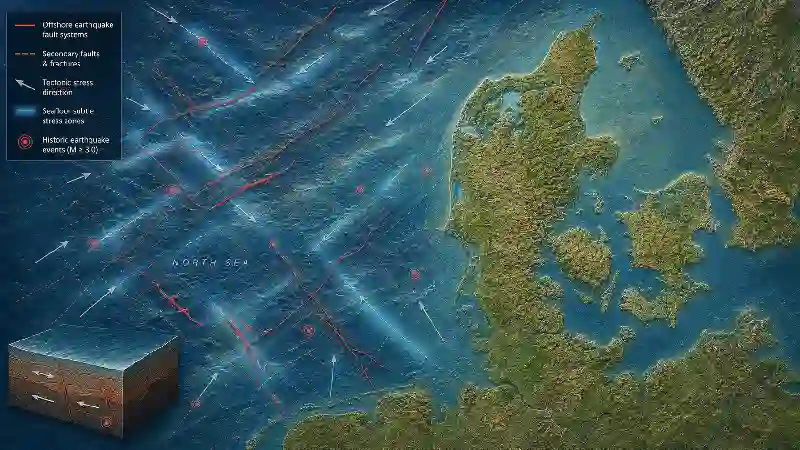
Some earthquakes near Denmark occur offshore beneath the North Sea.
- Hidden fault systems beneath the seafloor
- Minor tectonic adjustment
- Occasional measurable seismic events
These earthquakes are usually weak but detectable.
Explore earthquake types
Ancient Scandinavian Fault Reactivation
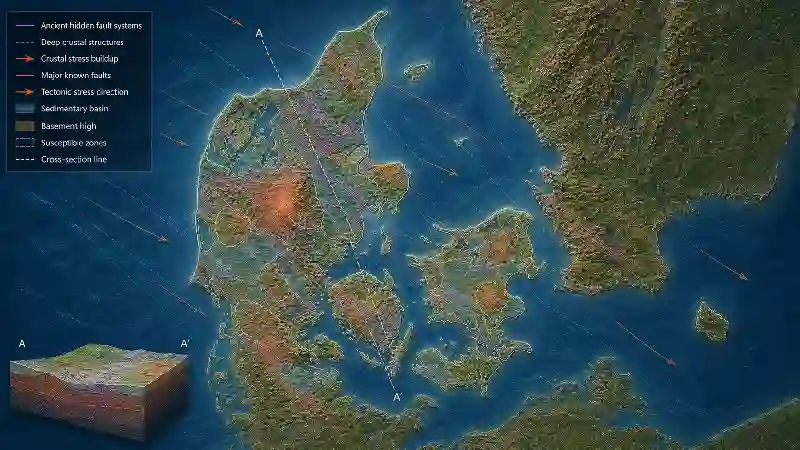
Denmark’s crust contains very old geological structures.
- Ancient faults remain underground
- Weak tectonic stress continues today
- Small earthquakes occur occasionally
Baltic Region Seismic Activity
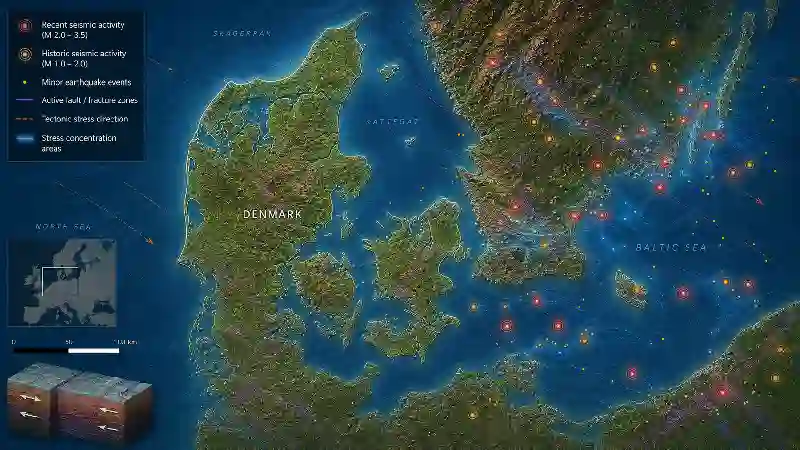
The Baltic region experiences minor crustal adjustment.
- Regional tectonic stress
- Very small earthquakes
- Linked partly to post-glacial processes
Denmark’s Stable Interior
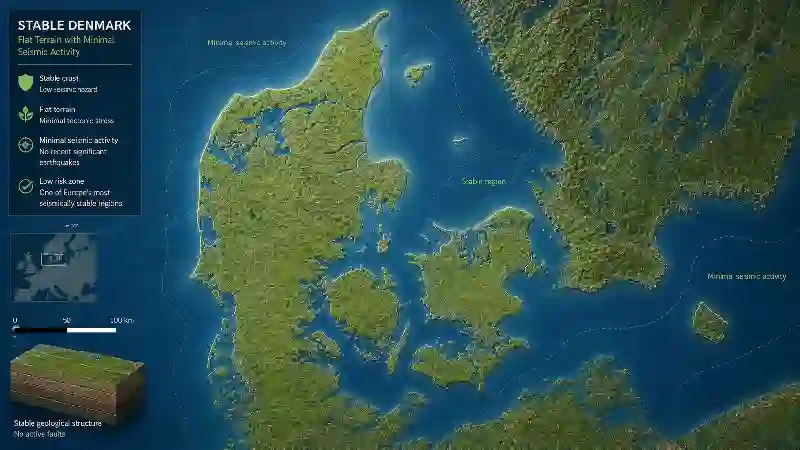
Most of Denmark remains geologically stable.
- Very low earthquake risk
- Minimal active fault movement
- Earthquakes are usually weak and infrequent
Recent Earthquake Activity in Denmark
Denmark experiences only occasional small earthquakes.
Recent patterns show:
- Minor offshore seismic activity
- Weak tremors in northern Denmark
- Small regional earthquakes linked to crust stress
Most earthquakes are too weak to be felt widely.
Notable Earthquakes Affecting Denmark
Strong earthquakes are rare in Denmark, but nearby regional earthquakes have occasionally been felt.
- 2008 Southern Sweden Earthquake
Felt across parts of Denmark. - North Sea Seismic Events
Offshore earthquakes occasionally detected near Danish waters. - Minor Danish Tremors
Small earthquakes recorded periodically by monitoring systems.
Understand magnitude vs impact
Denmark vs Other Earthquake Regions
Denmark’s seismic activity is extremely mild compared to active tectonic regions.
- Denmark → weak intraplate earthquakes
- Sweden → stronger glacial rebound influence
- Iceland → volcanic + tectonic spreading
- California → transform faults like the San Andreas Fault
Denmark is one of Europe’s quieter seismic regions/
Can Earthquakes in Denmark Be Predicted?
No — earthquakes cannot be predicted precisely.
Scientists can:
- monitor seismic activity
- study crustal stress
- track regional fault movement
But exact timing remains uncertain.
Learn more → Can earthquakes be predicted
Yes — but they are usually very small.
Northern and offshore regions.
Strong damaging earthquakes are extremely rare.
Because ancient faults inside the Eurasian Plate still reactivate under weak tectonic stress.
Final Thoughts
Denmark’s earthquakes are subtle reminders that even stable-looking regions are never completely motionless. Although seismic activity here is very weak compared to major earthquake zones, ancient fault systems and slow crustal stress still occasionally shake the ground beneath northern Europe.
Denmark is a good example of how Earth’s tectonic forces can continue operating quietly for thousands — even millions — of years.