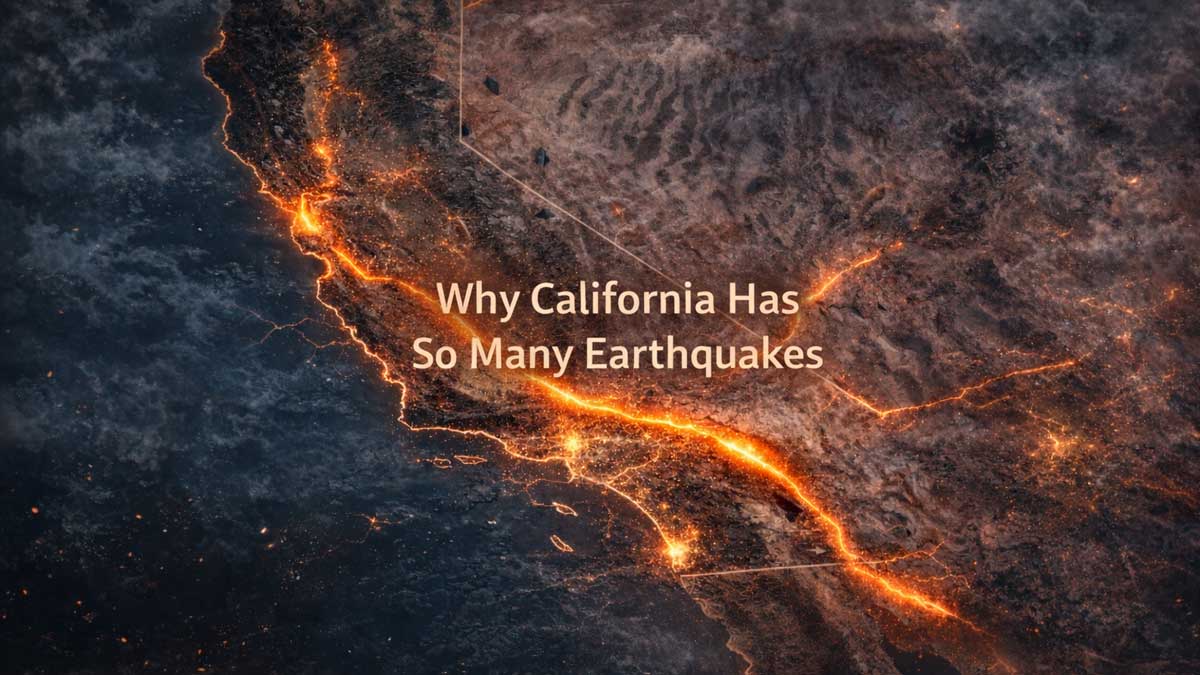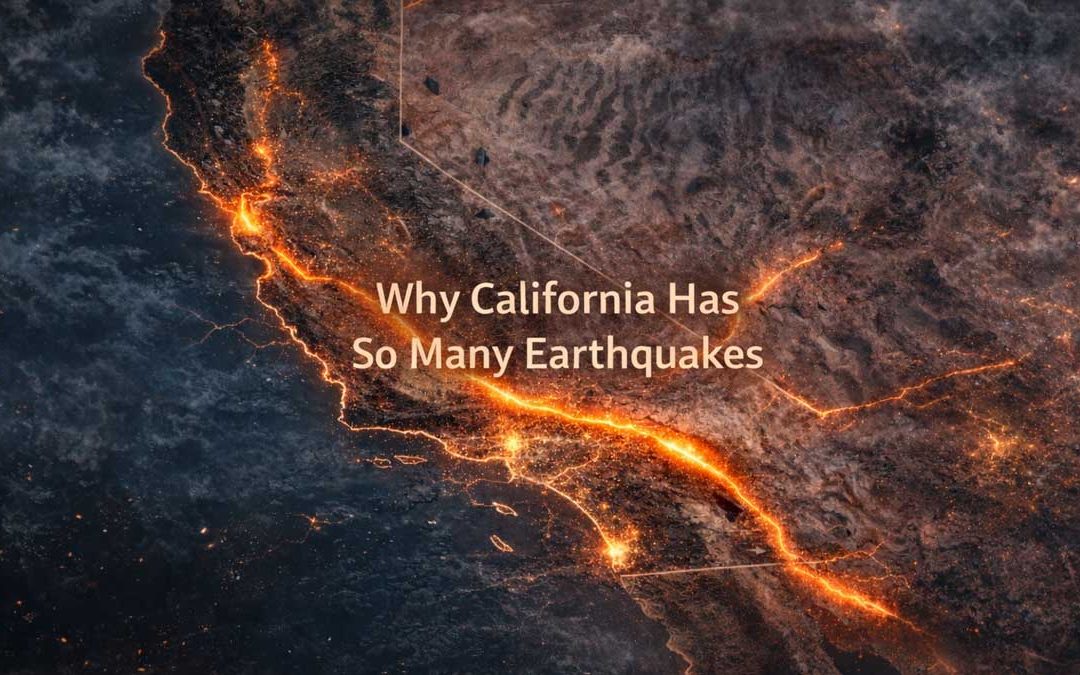
California doesn’t just “have earthquakes” — it sits on one of the most active geological boundaries on Earth.
That’s why earthquakes here are not rare events. They are part of how the Earth constantly adjusts and releases built-up pressure beneath the surface.
To understand the basic mechanism, see our guide on what causes earthquakes
The Real Reason: Tectonic Plate Boundary
California lies directly on the boundary between:
- Pacific Plate
- North American Plate
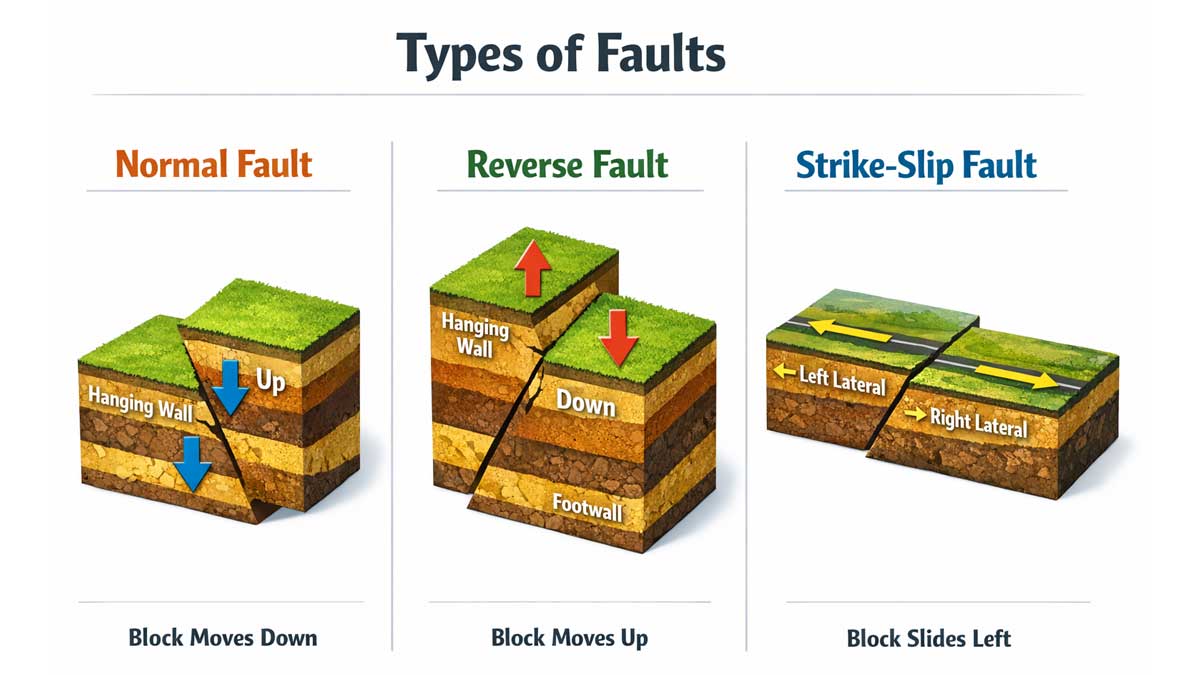
These plates are constantly moving past each other in what scientists call a transform boundary.
Instead of colliding or separating, they slide sideways.
But this movement is not smooth.
- Plates get stuck due to friction
- Stress builds up over time
- Sudden release = earthquake
This is why California experiences frequent seismic activity.
The San Andreas Fault System
The most famous fault in California is the San Andreas Fault, but it’s only part of a larger system.
Major faults include:
- San Andreas Fault
- Hayward Fault
- Calaveras Fault
- San Jacinto Fault
Learn more in our full fault lines guide
This network of faults spreads across the state, which is why earthquakes can happen in multiple regions — not just one location.
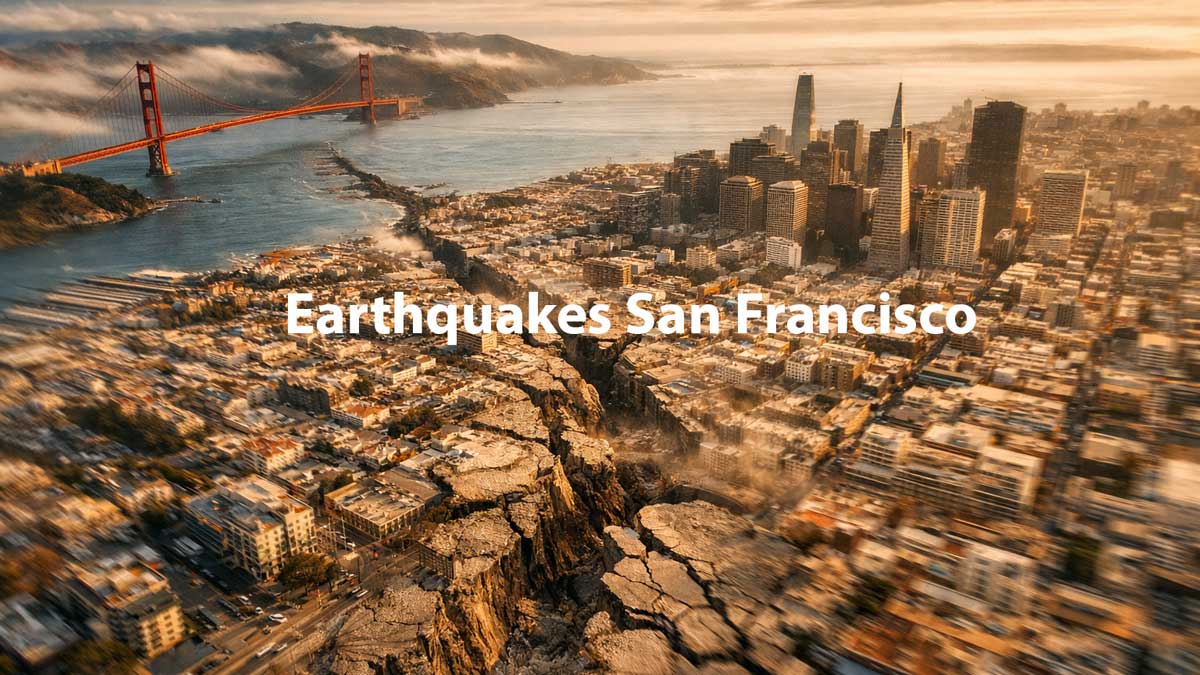
Why Cities Like San Francisco Experience Frequent Earthquakes
Cities built near major faults face continuous seismic risk.
For example:
- San Francisco sits close to the San Andreas Fault
- The Hayward Fault runs under densely populated areas
Learn more in our detailed guide on earthquakes in San Francisco
This proximity means even moderate earthquakes can have significant impact.
Why Some Earthquakes in California Are More Dangerous
Not all earthquakes cause major damage.
The impact depends on:
1. Depth
Shallow earthquakes produce stronger surface shaking.
2. Location
Urban areas face higher risk due to dense infrastructure.
3. Ground conditions
Soft soil amplifies shaking.
This is why understanding magnitude vs intensity matters
What Happens During an Earthquake in California
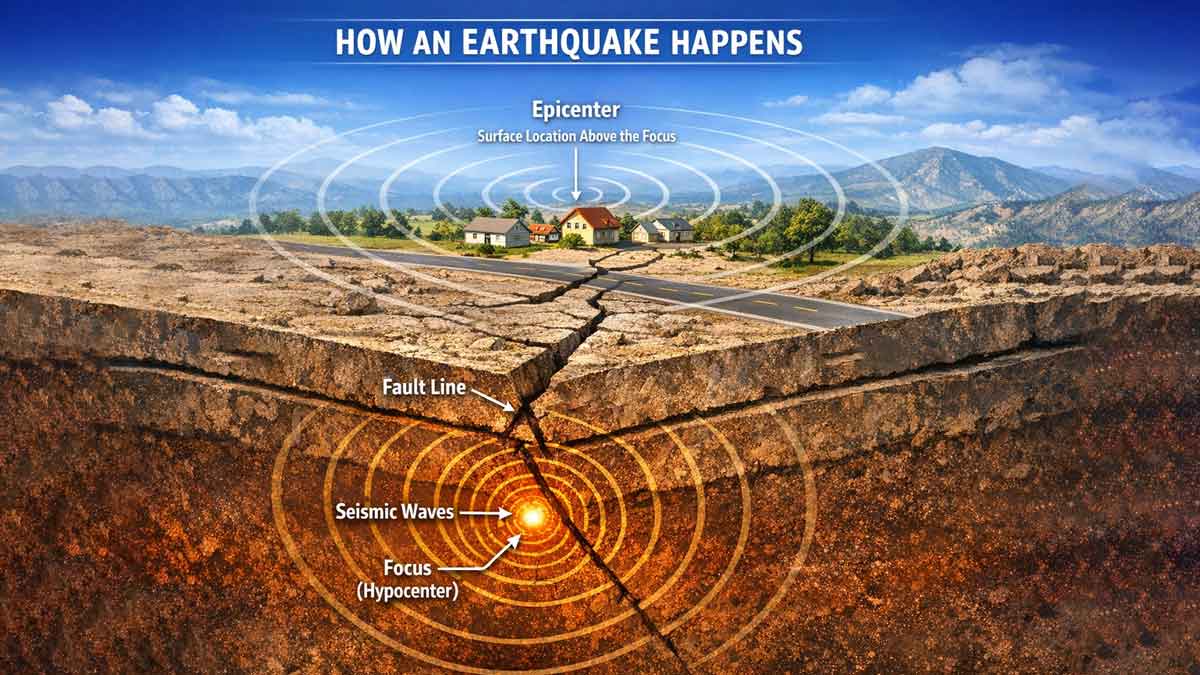
Here’s what happens step by step:
- Stress builds along a fault
- Rocks break at the focus
- Energy releases outward as seismic waves
- Surface shaking occurs at the epicenter
- Buildings respond differently based on structure
Learn how energy travels in our seismic waves guide
How Often Do Earthquakes Happen in California?
California experiences thousands of earthquakes each year.
- Most are too small to feel
- Some are noticeable
- Major earthquakes are rare but inevitable
The region is constantly adjusting as tectonic plates move.
Can California Predict Earthquakes?
No — earthquakes cannot be predicted with exact timing.
However, scientists can:
- identify high-risk zones
- estimate probabilities
- monitor fault activity
Early warning systems can detect fast-moving waves and provide seconds of warning.
Because it lies on a tectonic plate boundary where two plates slide past each other.
The San Andreas Fault and Hayward Fault are among the most dangerous.
Earthquakes are not necessarily increasing, but monitoring and detection have improved.
No area is completely safe, but building codes have improved resilience.