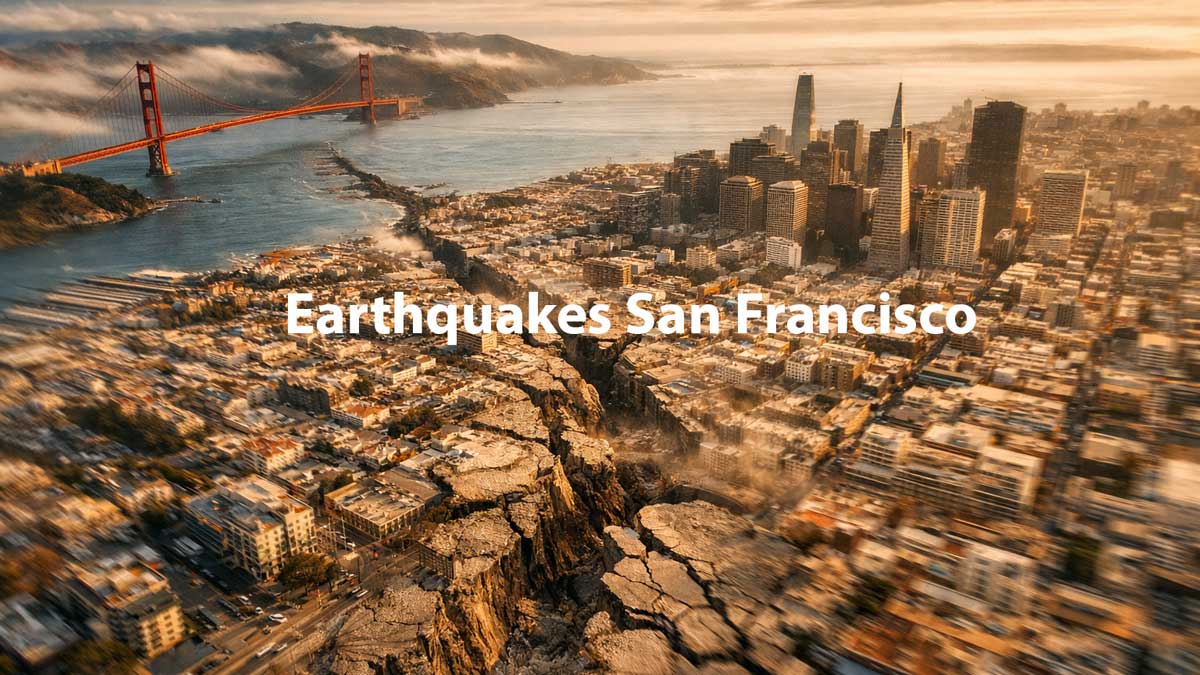
An earthquake is the sudden shaking of the ground caused by the release of energy inside the Earth. This energy usually builds up when rocks in the Earth’s crust are stressed by the movement of tectonic plates. When that stress becomes too great, the rocks break or slip along a fault, releasing seismic energy.
Earthquakes can be so small that people never notice them, or so strong that they damage buildings, roads, and landscapes. They are one of the clearest signs that our planet is constantly changing beneath the surface.
In simple words, an earthquake happens when part of the Earth moves suddenly and sends vibrations through the ground.
How Does an Earthquake Happen?
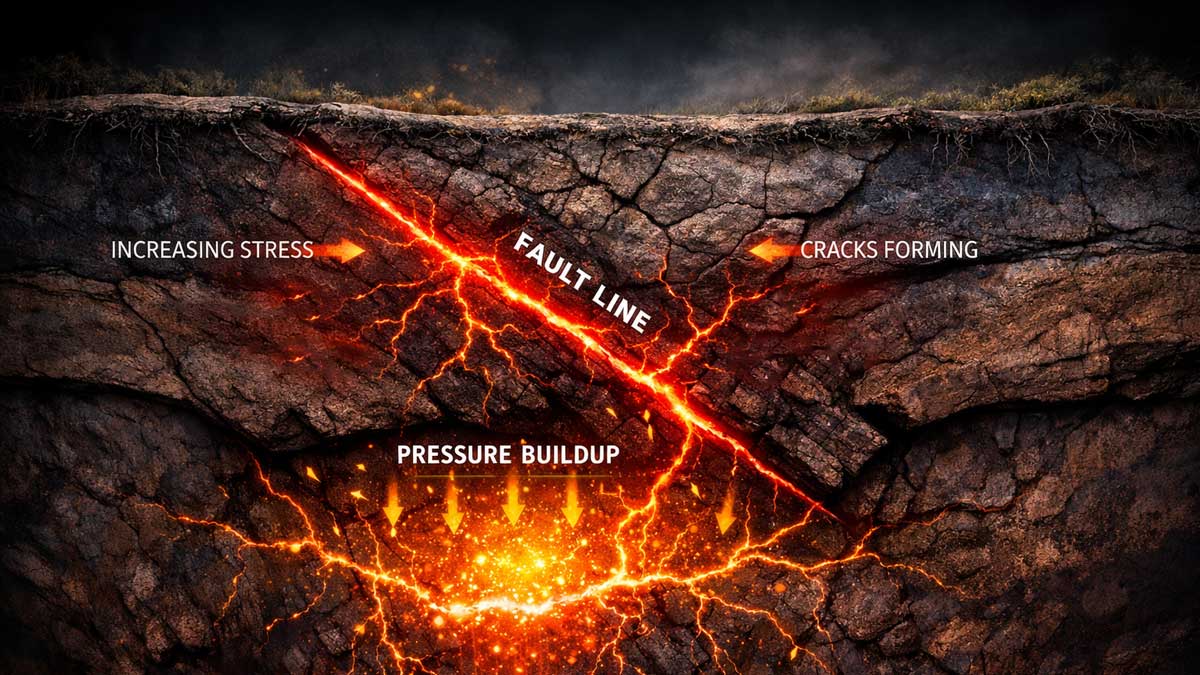
The outer layer of the Earth is broken into large pieces called tectonic plates. These plates are always moving, although the movement is usually very slow. In some places, plates push against each other, pull apart, or slide past one another.
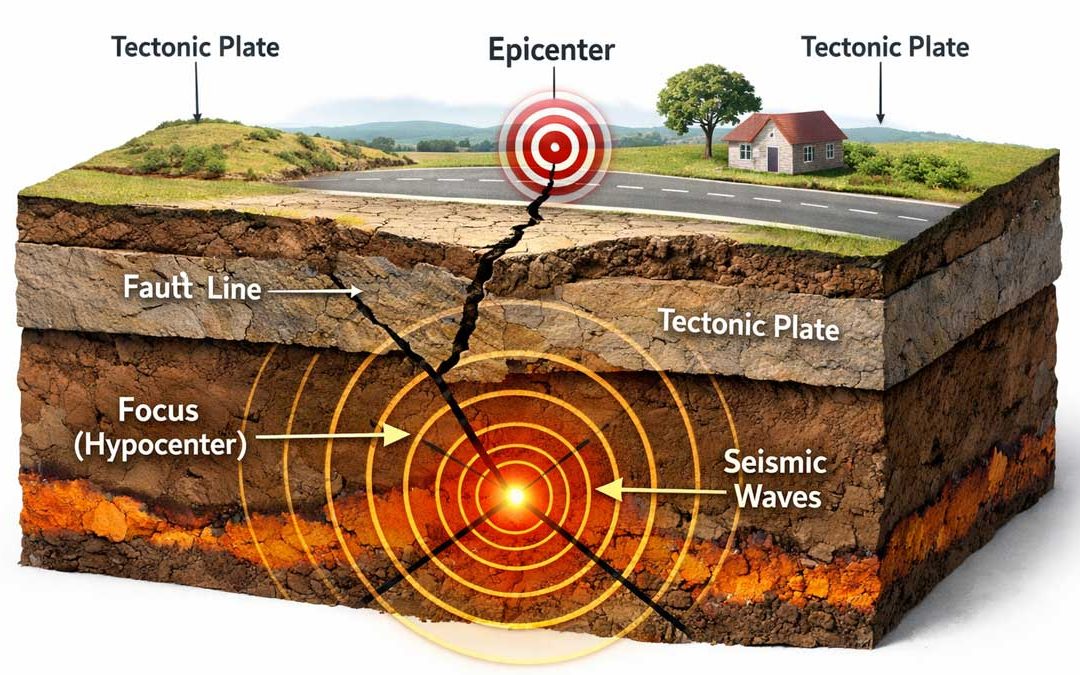
As plates move, stress builds up in rocks along faults. When the pressure becomes stronger than the rocks can handle, the rocks suddenly break or shift. That sudden release of energy creates seismic waves, which travel through the Earth and cause shaking at the surface.
This is why earthquakes often happen without warning.
What Causes Earthquakes?
Most earthquakes are caused by tectonic plate movement. However, not all earthquakes happen for the same reason.
Common causes include:
Tectonic movement
This is the main cause of earthquakes worldwide. It happens when plates interact at their boundaries.
Fault movement
When rocks slip along a fault line, stored energy is released as an earthquake.
Volcanic activity
Some earthquakes happen near volcanoes because of moving magma underground.
Human activities
In some cases, mining, reservoir filling, drilling, or underground explosions can trigger small earthquakes.
Even though the causes may differ, the basic idea remains the same: energy builds up and is released suddenly.
Explore in depth the causes of earthquakes
Where Do Earthquakes Start?
An earthquake begins at a point inside the Earth called the focus or hypocenter. The point directly above it on the Earth’s surface is called the epicenter.
The focus is where the rock movement first begins. The epicenter is the surface location people usually refer to when describing where the earthquake happened.
Understanding this difference helps explain why some places experience stronger shaking than others.
Why Do Earthquakes Happen More in Some Areas?
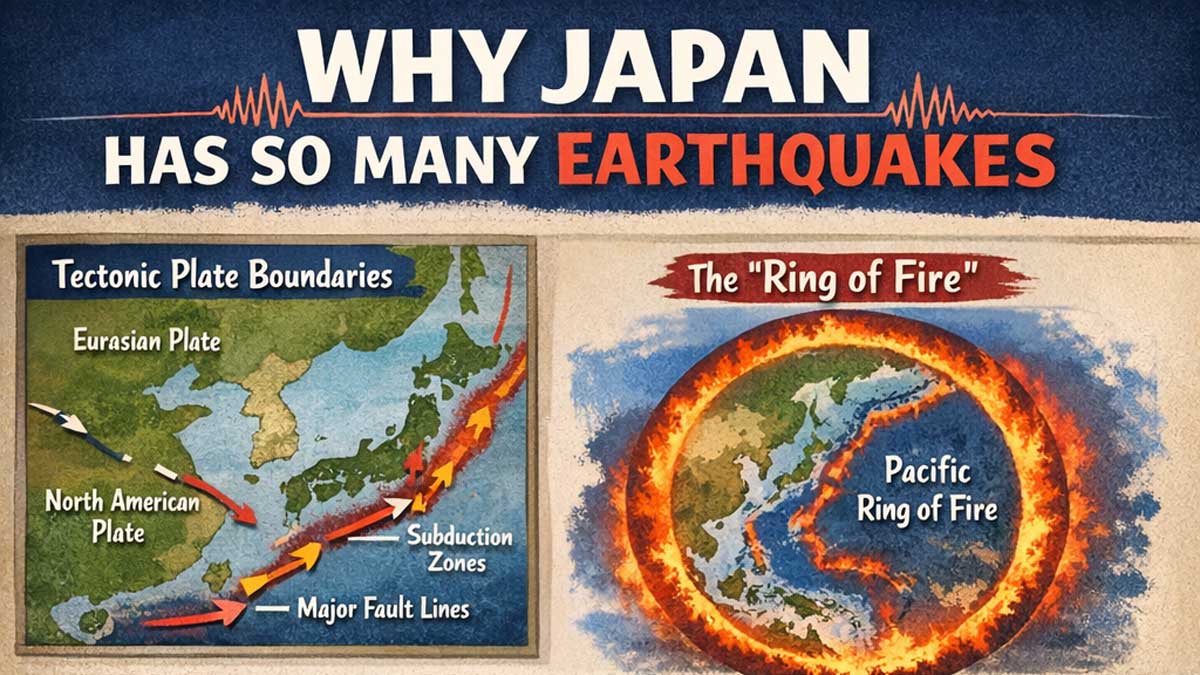
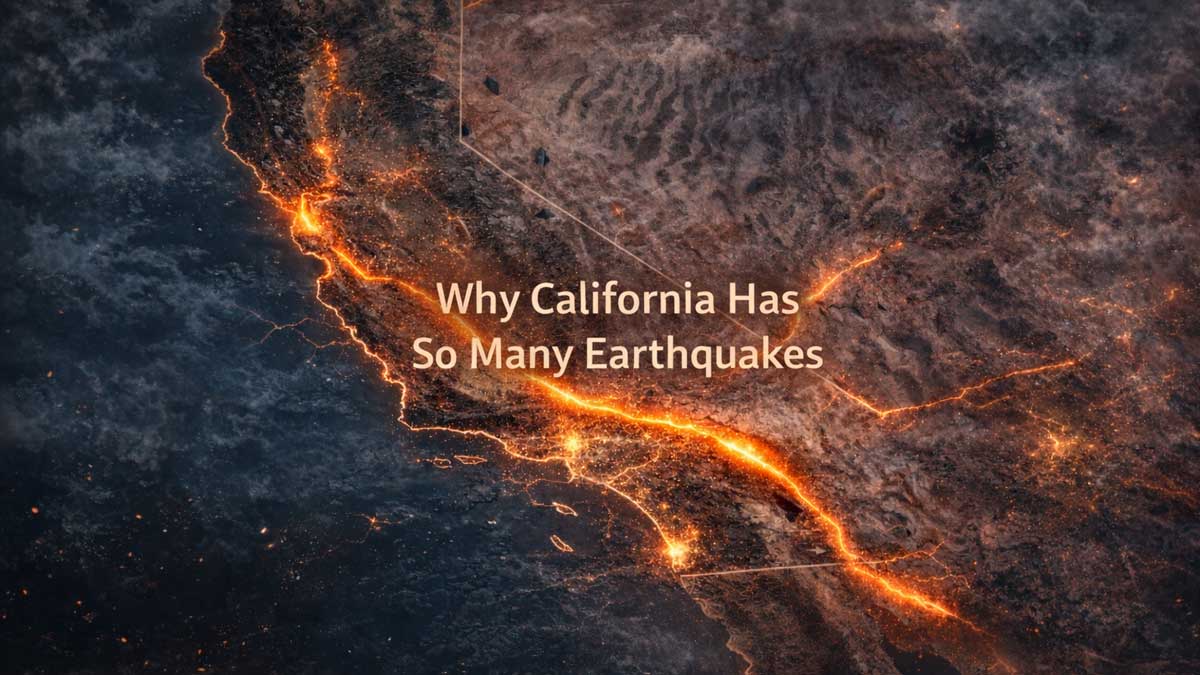
Earthquakes are more common in regions close to tectonic plate boundaries. These are places where the Earth’s crust is under more stress.
Major earthquake-prone areas include:
- the Pacific Ring of Fire
- California
- Japan
- Alaska
- parts of Indonesia
- Turkey and nearby regions
These places experience frequent earthquakes because plate movement is more active there than in stable interior regions.
What Happens During an Earthquake?
During an earthquake, energy travels outward from the focus in the form of seismic waves. These waves move through the Earth and along its surface.
There are three main effects people may notice:
- ground shaking
- rolling or vibrating movement
- cracking, collapse, or shifting of structures
Some earthquakes last only a few seconds, while stronger ones may continue longer and be followed by aftershocks.
Even though earthquakes feel sudden, the processes behind them may take years or centuries to build up underground.
Are All Earthquakes Dangerous?
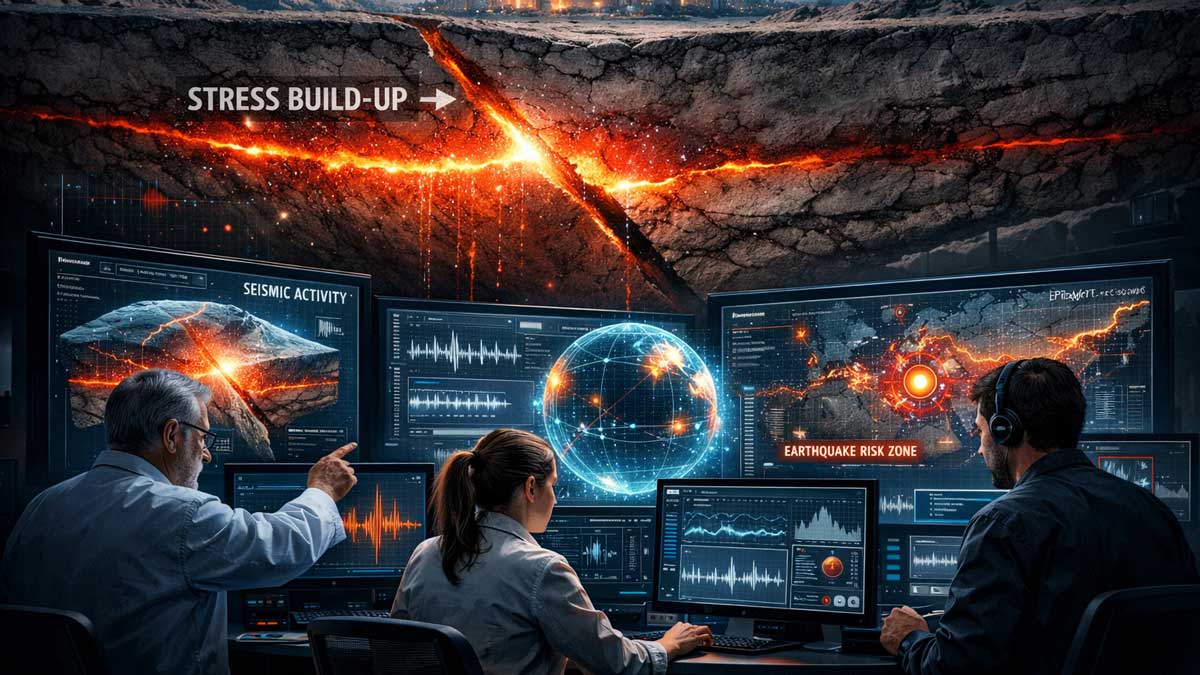
No, not all earthquakes are dangerous. Many are too weak to be felt. Scientists detect thousands of small earthquakes every year using sensitive instruments.
The danger depends on several factors:
- magnitude
- depth
- distance from the epicenter
- building quality
- local ground conditions
A moderate earthquake in a densely populated city can be more destructive than a stronger earthquake in a remote area.
How Are Earthquakes Measured?
Earthquakes are measured in two main ways:
Magnitude
Magnitude shows how much energy the earthquake released.
Intensity
Intensity describes how strong the shaking feels in a specific place and how much damage it causes.
This difference is important because a single earthquake has one magnitude, but its intensity can vary from one location to another.
To get a deeper understanding of ground movement, explore our guide on seismic waves.
Why Is It Important to Understand Earthquakes?
Understanding earthquakes helps people:
- learn how the Earth works
- identify high-risk regions
- improve building safety
- prepare for emergencies
- reduce damage and loss of life
Earthquakes are natural events, but good science and preparedness can make a major difference in how communities respond to them.
Earthquakes in Simple Terms
If you need the easiest definition:
An earthquake is the shaking of the ground caused by sudden movement inside the Earth.
This movement usually happens when rocks break or slip because of pressure from tectonic plate motion.
That simple idea is the foundation for understanding everything else about earthquakes.
Conclusion
An earthquake is more than just ground shaking. It is the result of energy being released deep inside the Earth, usually because of tectonic plate movement and fault activity. Some earthquakes are minor, while others can cause major destruction.
By learning what earthquakes are and how they happen, we can better understand our planet and prepare for future seismic events.
To explore the full topic, read our complete guide on earthquakes, including causes, types, seismic waves, measurement, and safety.
Frequently Asked Questions
An earthquake is the sudden shaking of the ground caused by movement inside the Earth.
These regions lie near active tectonic plate boundaries, where stress and movement are more common.
Earthquakes begin at a point inside the Earth called the focus, or hypocenter.