by Gelogia | Oct 13, 2024 | Mineralogy
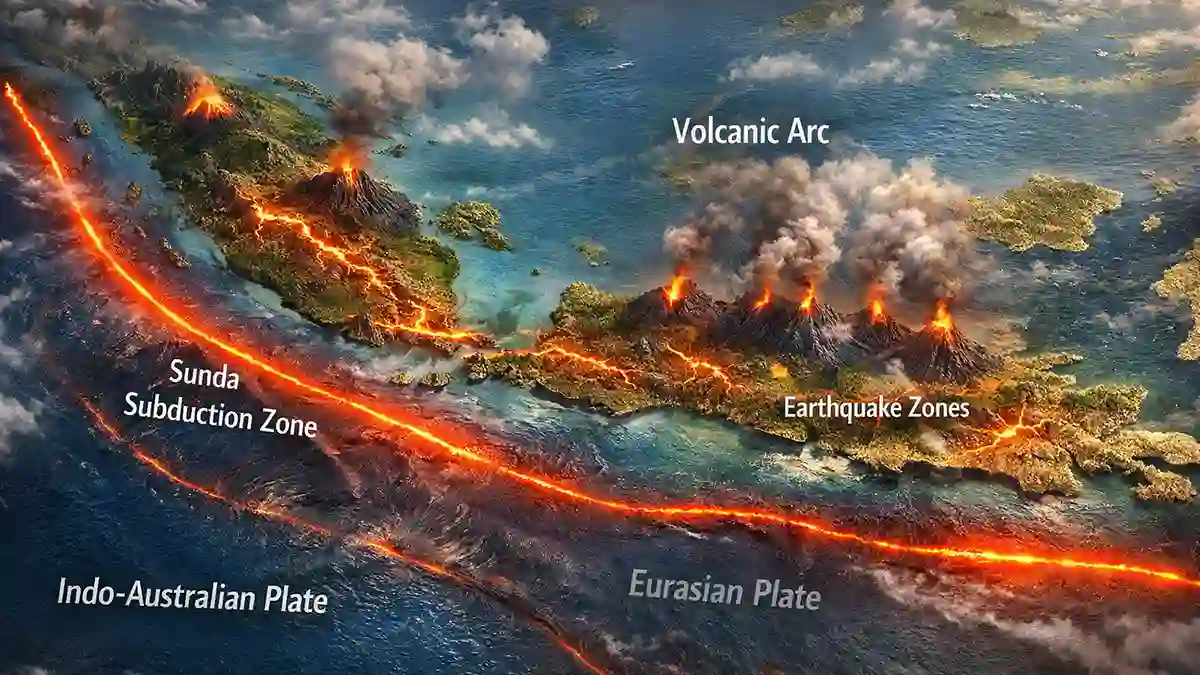
X-ray Crystallography: X-ray Crystallography is a technique in crystallography in which the pattern produced by X-ray diffraction through the closely spaced lattice of atoms in a crystal is recorded and then analyzed to reveal the nature of that lattice. Uses: X-ray...
by Gelogia | Oct 12, 2024 | Mineralogy
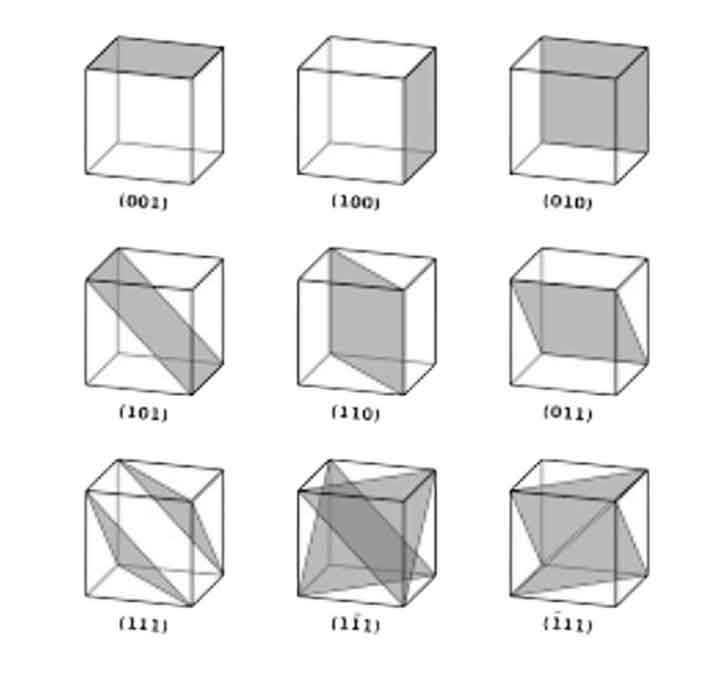
Miller Indices: Miller indices for crystallographic planes are the reciprocals of the fractional intercepts (with fractions cleared), which the plane makes with the crystallographic x, y, and z axes of the three nonparallel edges of the unit cell. It consists of a...
by Gelogia | Oct 9, 2024 | Mineralogy
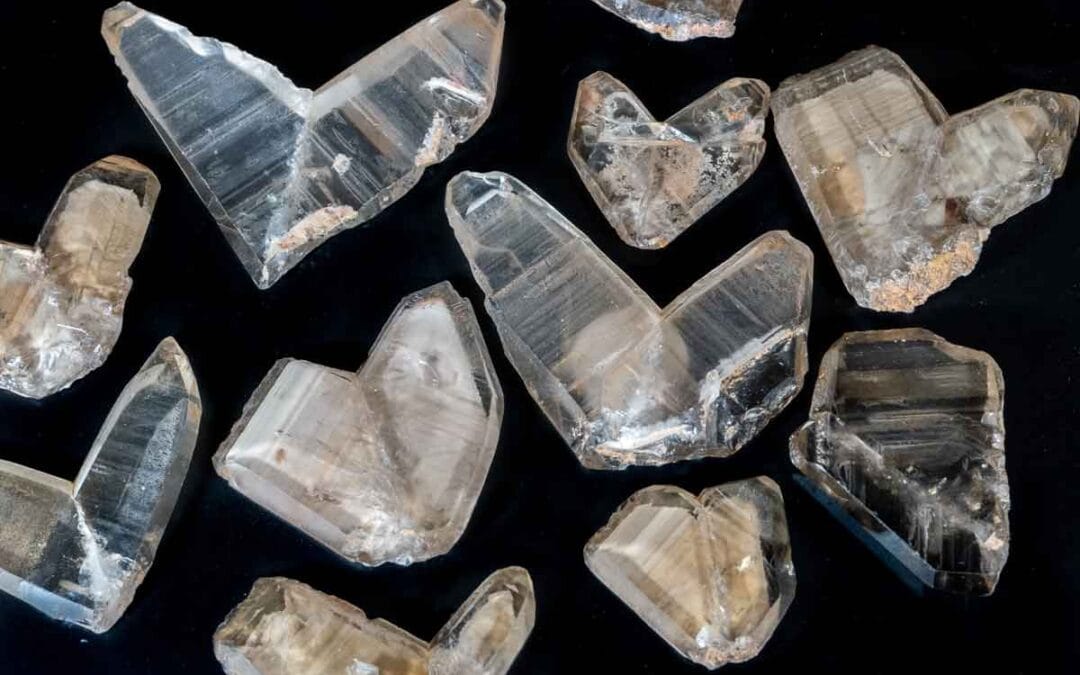
Crystal twinning is the symmetrical intergrowth of two or more crystals, related by a symmetry operation known as a twin element. Twin elements can include mirror planes, rotation axes (typically two-fold), and rotation inversion, which are distinct from the natural...
by Gelogia | Oct 7, 2024 | Mineralogy
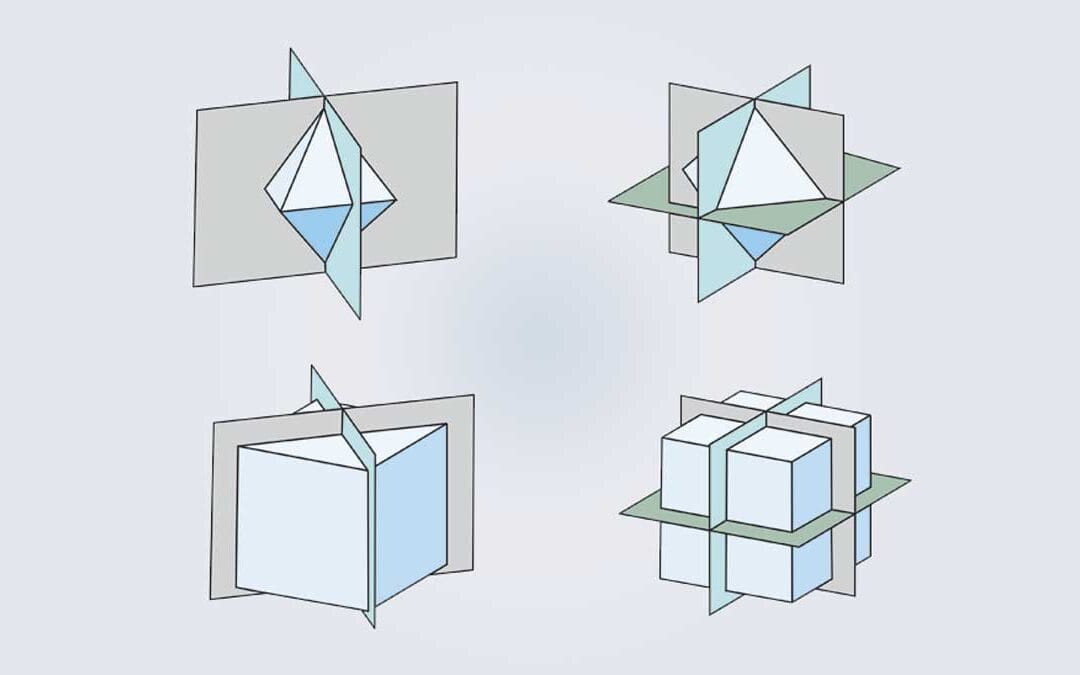
Crystal symmetry refers to the regular arrangement of faces, edges, and other structural features in a crystal. This regularity constitutes the crystal’s symmetry. The degree of symmetry varies in different minerals and is employed in the classification of...
by Gelogia | Oct 6, 2024 | Mineralogy
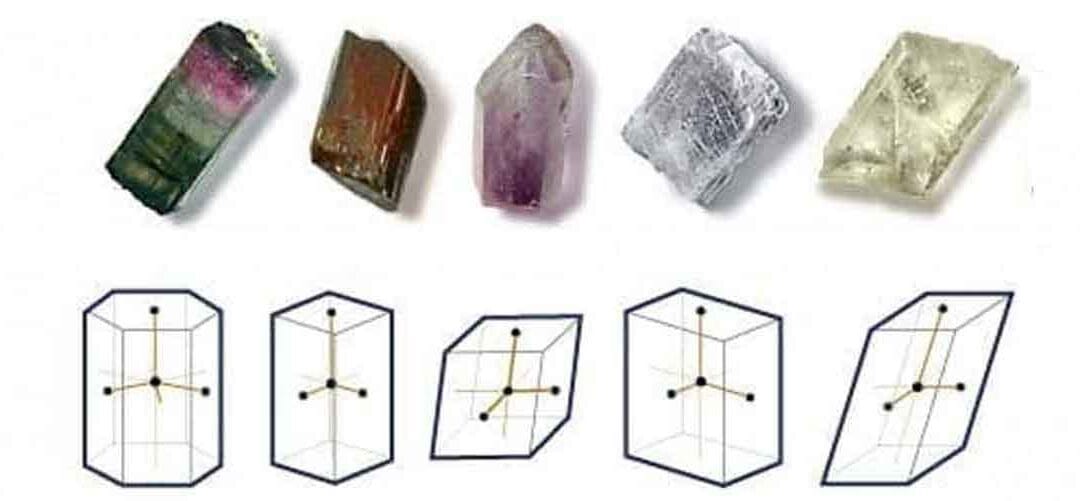
A Crystal system includes all the symmetry classes that share a similar constant of lattice parallelepiped. The classes are grouped into six crystal systems based on the absence or presence of certain types of rotation axes. Also, we can say that the basis of...
by Gelogia | Feb 16, 2022 | Mineralogy, Petrology, Structural Geology
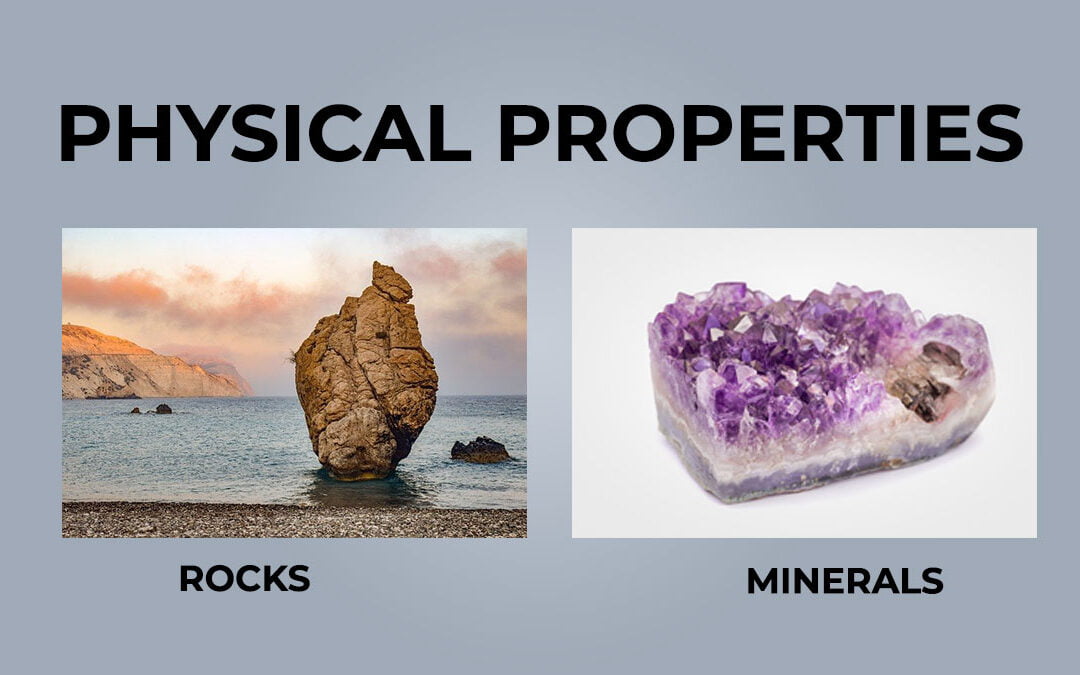
The study of rock deformation needs knowledge of the physical properties of rock about deformation. These properties are concerned either with elastic or with plastic deformation or with rupture. Table of Content Elastic propertiesPlastic propertiesRuptureBrittle...