Short answer: No — earthquakes cannot be predicted with exact time and location.
But that doesn’t mean scientists are completely in the dark.
They can identify high-risk areas, estimate probabilities, and even provide a few seconds of warning before strong shaking begins.
To understand why earthquakes happen in the first place, see our guide on what causes earthquakes
Why Earthquakes Are So Hard to Predict
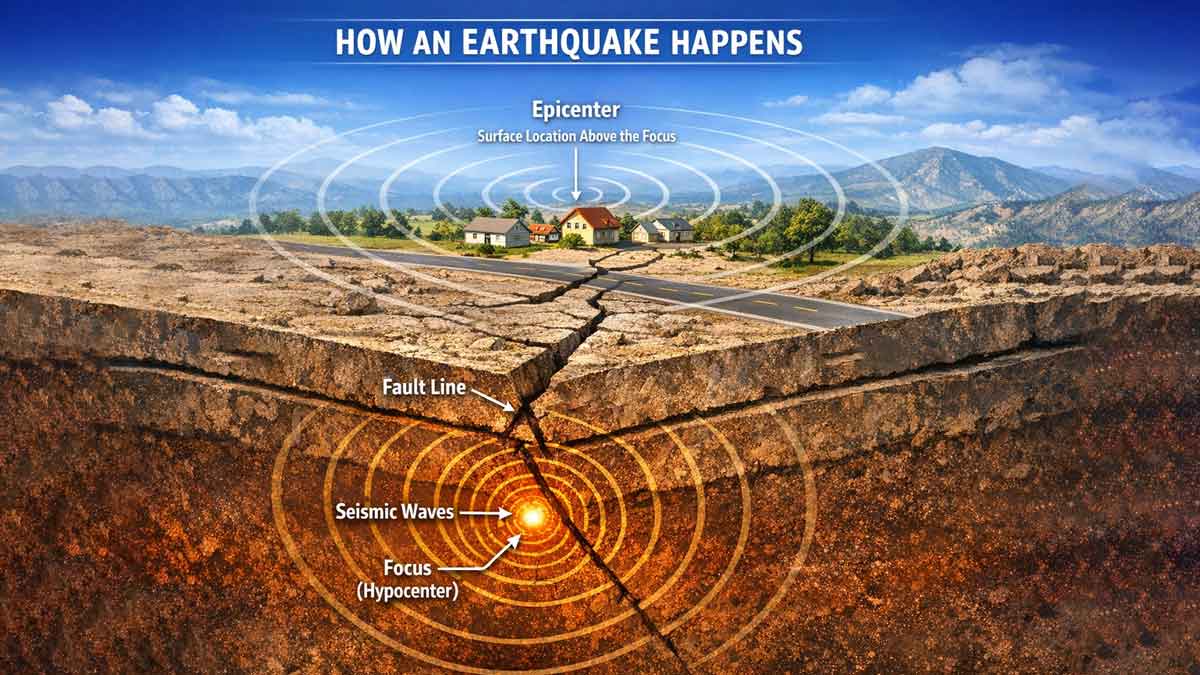
Earthquakes happen when stress builds up along a fault and suddenly releases.
The problem is:
Scientists cannot directly observe stress deep underground.
Even though we know:
- where fault lines are
- how plates move
We still don’t know:
- exactly when rocks will break
- how much energy will be released
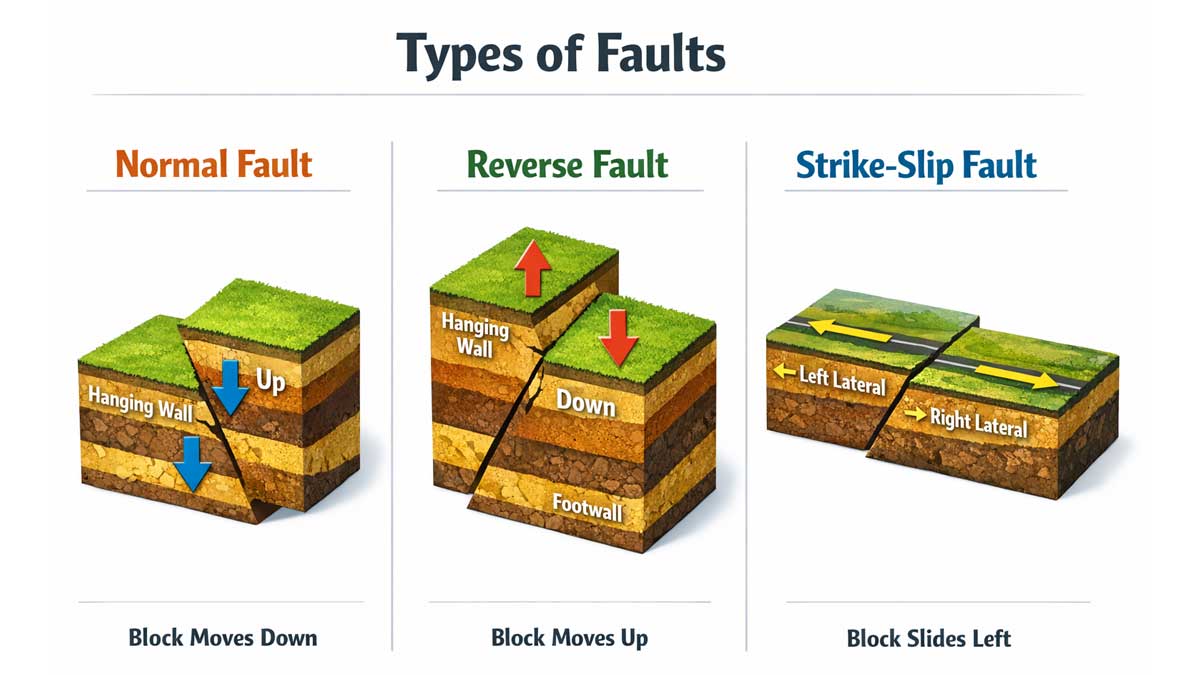
Learn more about how faults work in our fault lines guide
Prediction vs Forecasting (Important Difference)
Many people confuse prediction with forecasting.
🔴 Prediction (Not possible)
- Exact time
- Exact location
- Exact magnitude
Example:
“An earthquake will happen tomorrow at 2 PM”
❌ This is NOT possible.
🟢 Forecasting (Possible)
- Probability over time
- Risk zones
- Long-term likelihood
Example:
A major earthquake is likely in California in the next 30 years.
See why this region is active in our guide on why California has so many earthquakes
Real Example: San Francisco
San Francisco is located near major fault systems like the San Andreas Fault.
Scientists know:
- the area is high risk
- large earthquakes have happened before
But they cannot predict exactly when the next one will occur.
Learn more in our full guide on earthquakes in San Francisco
What Early Warning Systems Can Do
While prediction isn’t possible, early warning systems are a major breakthrough.
They work by detecting P-waves (fast, less damaging) before S-waves (strong shaking) arrive.
Learn how waves travel in our seismic waves guide
What this means:
- Sensors detect the earthquake
- System sends alerts instantly
- People get a few seconds of warning
Even 5–20 seconds can:
- stop trains
- shut down machines
- allow people to take cover
Can Animals Predict Earthquakes?
This is one of the most common questions.
Some reports suggest animals behave strangely before earthquakes:
- dogs barking
- birds flying away
- animals becoming restless
However, there is no scientific proof that animals can reliably predict earthquakes.
Warning Signs Scientists Study
Researchers are exploring possible early signals:
- small ground movements
- gas emissions
- changes in groundwater
- electrical signals in rocks
But none of these methods can consistently predict earthquakes yet.
Why Some Earthquakes Feel Stronger Than Others
Even without prediction, we can understand impact.
Factors include:
- depth
- distance
- soil type
Learn the difference in our guide on magnitude vs intensity
Will Earthquake Prediction Ever Be Possible?
Scientists are working on:
- AI models
- satellite monitoring
- deep-earth sensors
But right now: Earthquake prediction remains one of the biggest unsolved problems in geology.
No — exact prediction is not currently possible.
Yes — early warning systems can provide a few seconds of alert.
Because the processes happen deep underground and are not directly observable.
Yes — technology is improving forecasting and early warning systems.