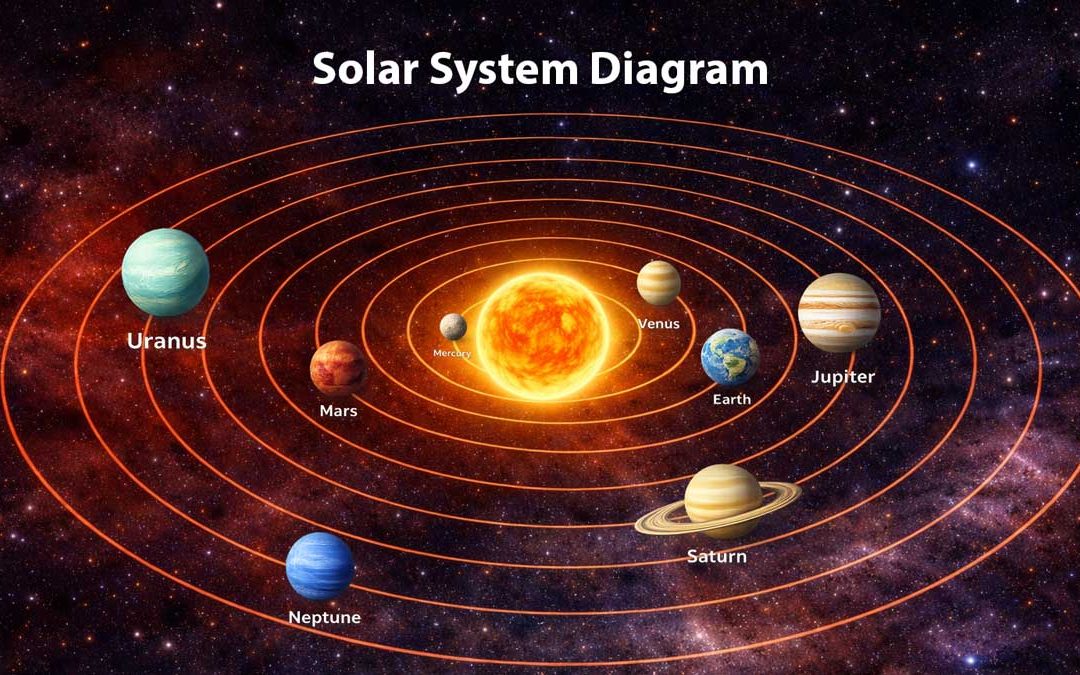
 A solar system diagram helps us understand how planets are arranged around the Sun. It shows the order of planets, their orbits, and their relative positions in space. The solar system consists of the Sun and everything that revolves around it, including eight...
 The asteroid belt is a region of space located between the orbits of Mars and Jupiter. It contains millions of rocky objects known as asteroids that orbit the Sun. These asteroids are remnants from the early formation of the solar system about 4.6 billion years ago....
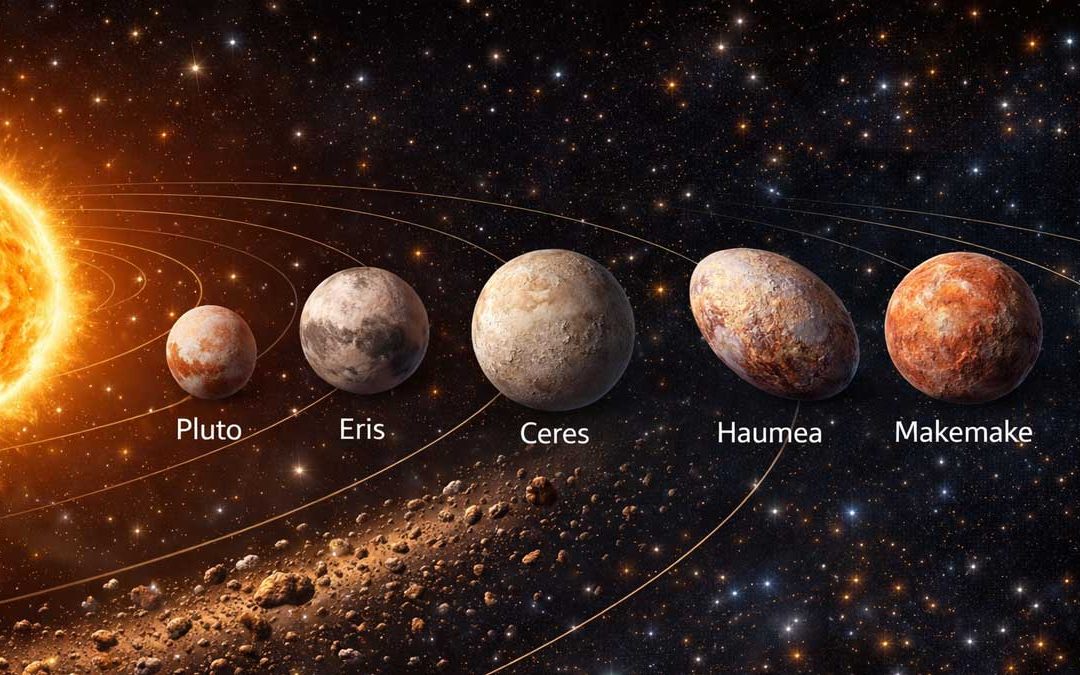 Dwarf planets are celestial bodies that orbit the Sun and share some characteristics with regular planets but differ in a few important ways. The most famous dwarf planet is Pluto, which was once considered the ninth planet of the solar system. In 2006, the...
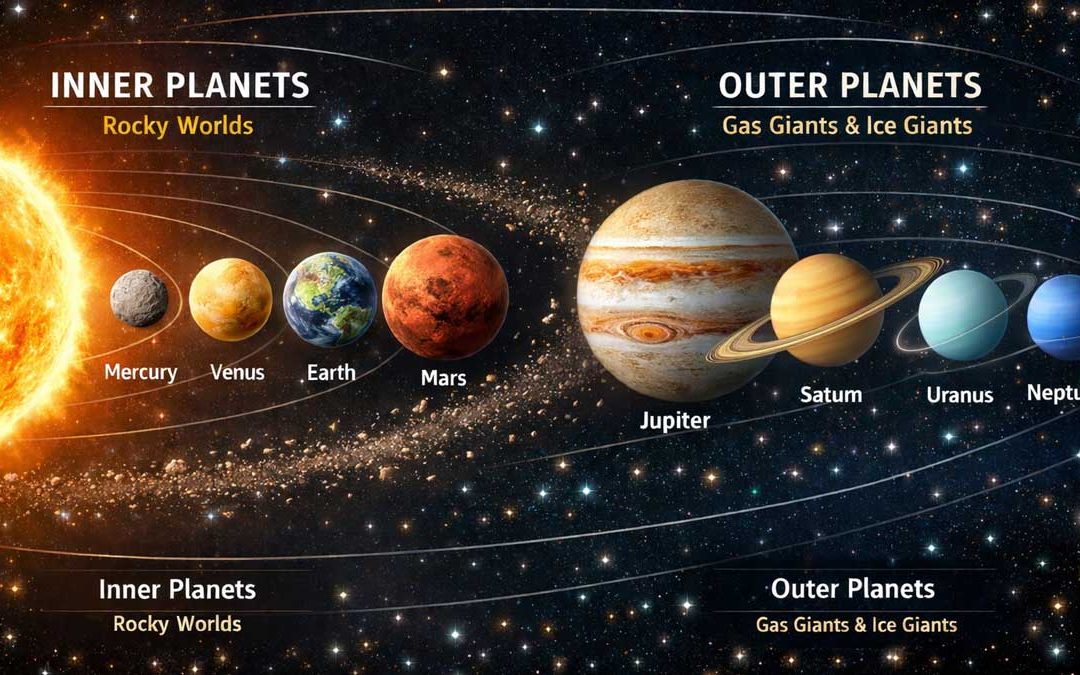 The planets in our solar system are commonly divided into two groups: inner planets and outer planets. These groups differ significantly in size, composition, atmosphere, and distance from the Sun. The four planets closest to the Sun are called inner planets, while...
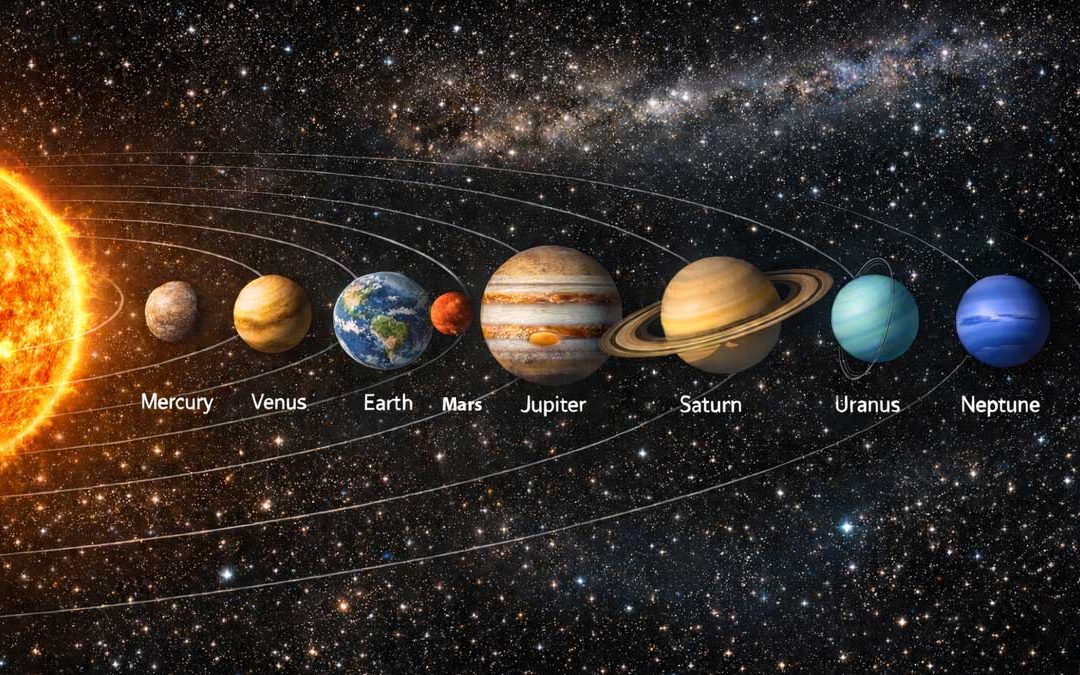 The planets in our solar system orbit the Sun at different distances. These distances influence each planet’s temperature, atmosphere, and orbital period. Scientists measure planetary distances using astronomical units (AU), where 1 AU equals the average distance...
