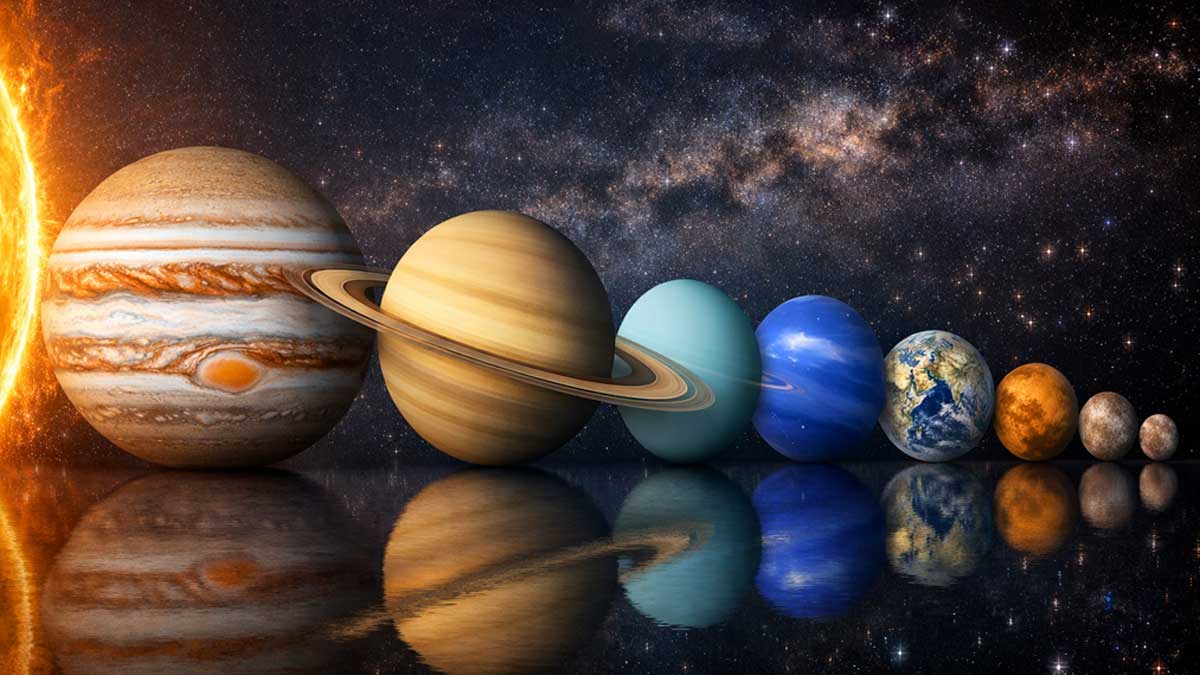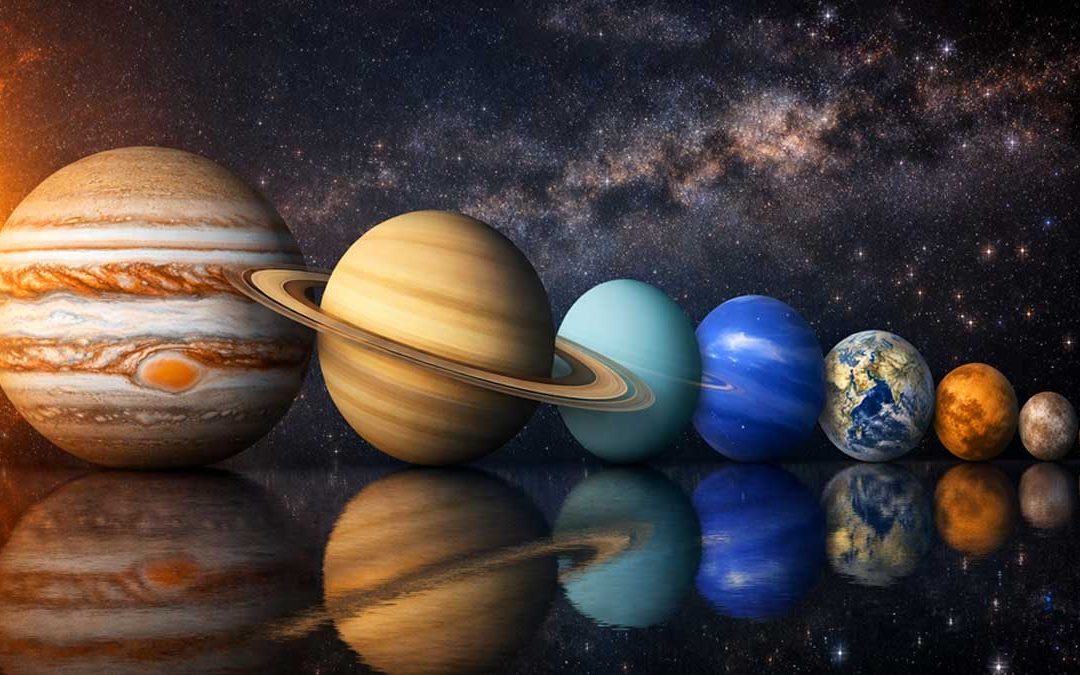
The planets in our solar system vary greatly in size. Some planets are massive gas giants, while others are small rocky worlds.
Jupiter is the largest planet in the solar system, while Mercury is the smallest. Understanding the size differences between planets helps scientists learn more about how planets formed and evolved billions of years ago.
Below is a simple comparison of the planets from largest to smallest.
Planets Size Comparison Chart
| Rank | Planet | Diameter (km) | Diameter (miles) |
|---|---|---|---|
| 1 | Jupiter | 139,820 km | 86,881 miles |
| 2 | Saturn | 116,460 km | 72,367 miles |
| 3 | Uranus | 50,724 km | 31,518 miles |
| 4 | Neptune | 49,244 km | 30,599 miles |
| 5 | Earth | 12,742 km | 7,918 miles |
| 6 | Venus | 12,104 km | 7,521 miles |
| 7 | Mars | 6,779 km | 4,212 miles |
| 8 | Mercury | 4,879 km | 3,032 miles |
Largest Planet in the Solar System
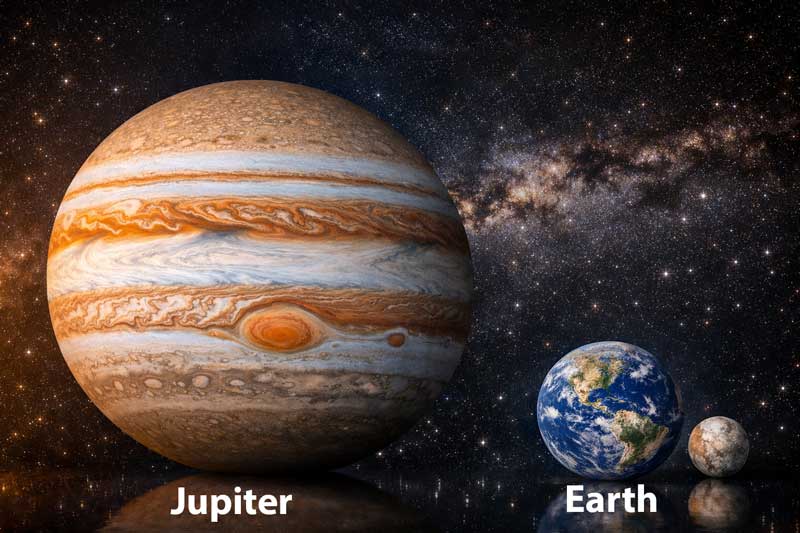
Jupiter is the largest planet in our solar system.
It is so large that more than 1,300 Earths could fit inside Jupiter.
Jupiter is classified as a gas giant, meaning it is mostly composed of hydrogen and helium rather than solid rock.
Learn more about Jupiter here: Jupiter Planet
Smallest Planet in the Solar System
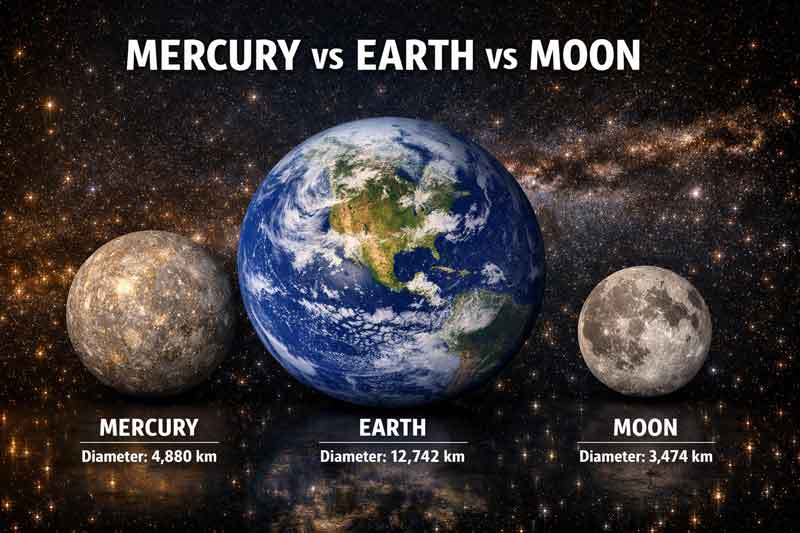
Mercury is the smallest planet in the solar system.
Even though it is small, Mercury is still a fascinating world with extreme temperatures and a heavily cratered surface.
Learn more about Mercury here: Mercury Planet
Why Planet Sizes Are Different
Planets formed from the protoplanetary disk surrounding the young Sun billions of years ago.
The planets closer to the Sun became rocky planets, while those farther away gathered large amounts of gas and became gas giants and ice giants.
This is why Jupiter and Saturn are much larger than planets like Earth and Mars.
Planet Types by Size
The planets can be divided into two main groups.
Rocky Planets (Terrestrial Planets)
These are smaller and have solid surfaces.
- Mercury
- Venus
- Earth
- Mars
Giant Planets
These planets are much larger.
- Jupiter
- Saturn (gas giants)
- Uranus
- Neptune (ice giants)
Interesting Facts About Planet Sizes
• Jupiter is more massive than all the other planets combined.
• Saturn is the second largest planet but is very low in density.
• Earth and Venus are almost the same size.
• Mercury is only slightly larger than Earth’s Moon.
• Uranus and Neptune are similar in size but very different internally.
Other Planets in the Solar System
You can explore detailed information about each planet:
- Mercury – the smallest planet
- Venus – the hottest planet
- Earth – the only known planet with life
- Mars – the red planet
- Jupiter – the largest planet
- Saturn – famous for its rings
- Uranus – the tilted ice giant
- Neptune – the farthest planet
Also read the full guide: Solar System Planets
FAQ About Planet Sizes
Jupiter is the largest planet in the solar system.
Mercury is the smallest planet.
They are very similar in size, but Earth is slightly larger.
Gas giants formed farther from the Sun where more gas and material were available.