Earthquakes are one of the most powerful natural phenomena on Earth. They occur when energy stored in the Earth’s crust is suddenly released, creating vibrations known as seismic waves.
From minor tremors to devastating disasters, earthquakes shape landscapes, influence tectonic activity, and impact millions of people worldwide.
In this guide, you will learn everything about earthquakes — including their causes, types, measurement systems, effects, and safety strategies.
👉 “Even though earthquakes may seem sudden, they are actually the result of slow geological processes happening over years or even centuries.”
👉 “Some earthquakes are so small that people never feel them, while others can reshape entire regions.”
What Is an Earthquake?
An earthquake is the sudden shaking of the ground caused by the movement of tectonic plates beneath the Earth’s surface.
This movement releases energy in the form of seismic waves, which travel through the Earth and cause the ground to shake.
If you want a beginner-friendly explanation, read our full article on what an earthquake is.
How Do Earthquakes Happen?
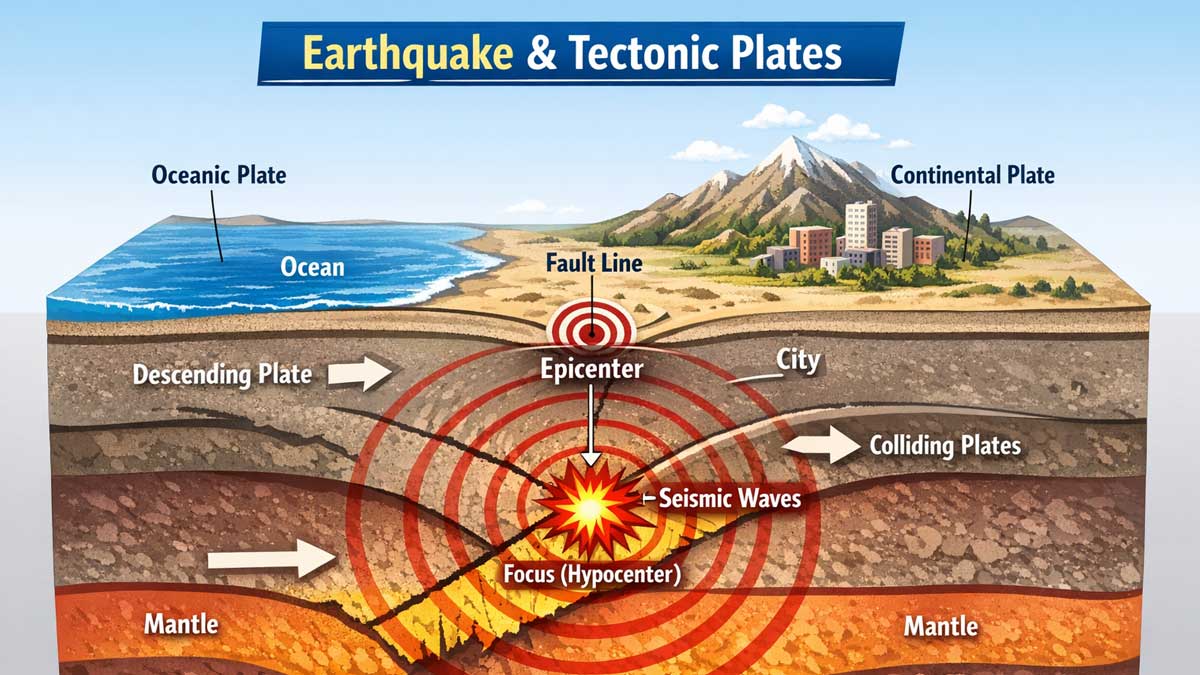
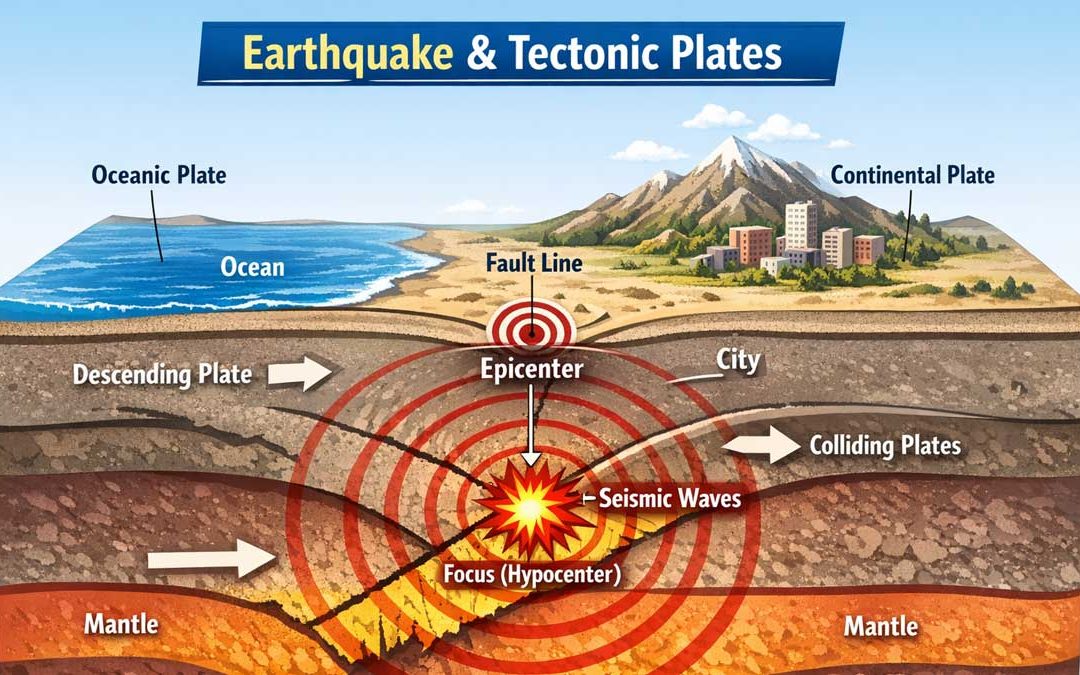
Earthquakes occur due to stress buildup along fault lines in the Earth’s crust.
When tectonic plates move:
- They may collide, pull apart, or slide past each other
- Stress builds up over time
- When the stress exceeds the strength of rocks, it releases suddenly
This release of energy causes an earthquake.
What Causes Earthquakes?
The main causes include:
- Tectonic plate movement
- Volcanic activity
- Human activities (mining, reservoir-induced earthquakes)
- Fault line movements
Most earthquakes occur along plate boundaries where tectonic activity is strongest.
Types of Earthquakes
Earthquakes are classified based on their causes:
- Tectonic earthquakes – caused by plate movement (most common)
- Volcanic earthquakes – linked to volcanic eruptions
- Collapse earthquakes – caused by underground cave collapses
- Explosion-induced earthquakes – due to human activities
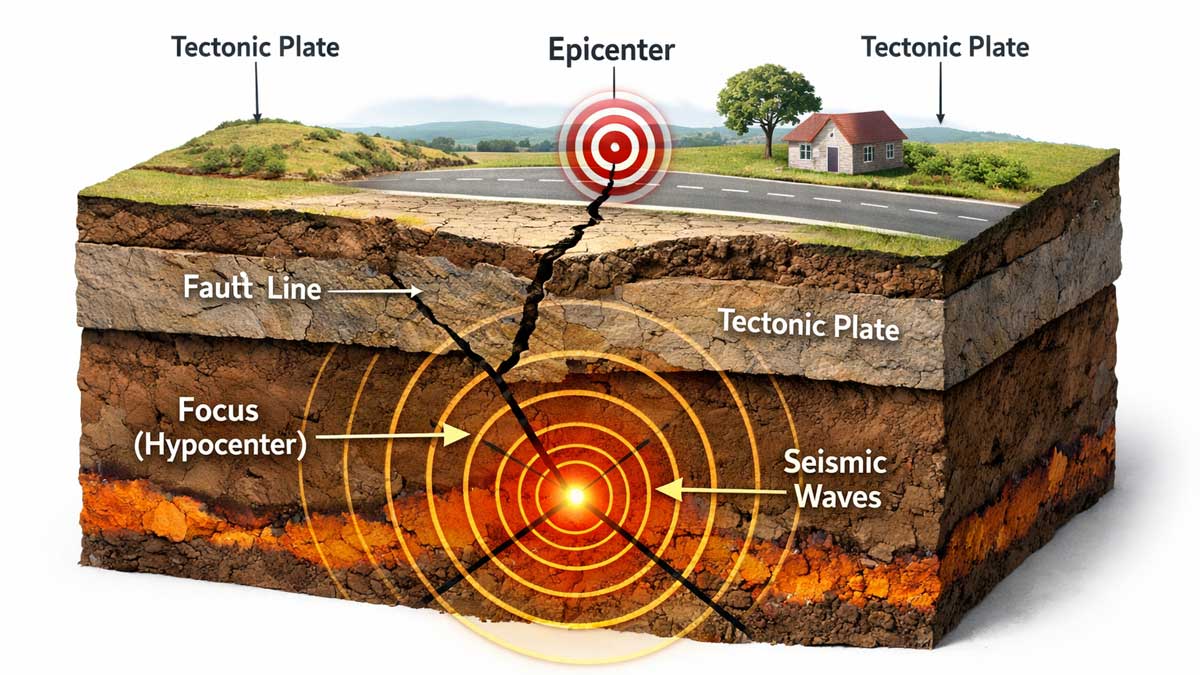
Focus and Epicenter
Every earthquake has two key points:
- Focus (Hypocenter): The point inside the Earth where the earthquake starts
- Epicenter: The point directly above the focus on the Earth’s surface
Understanding these helps scientists locate earthquakes accurately.
Seismic Waves
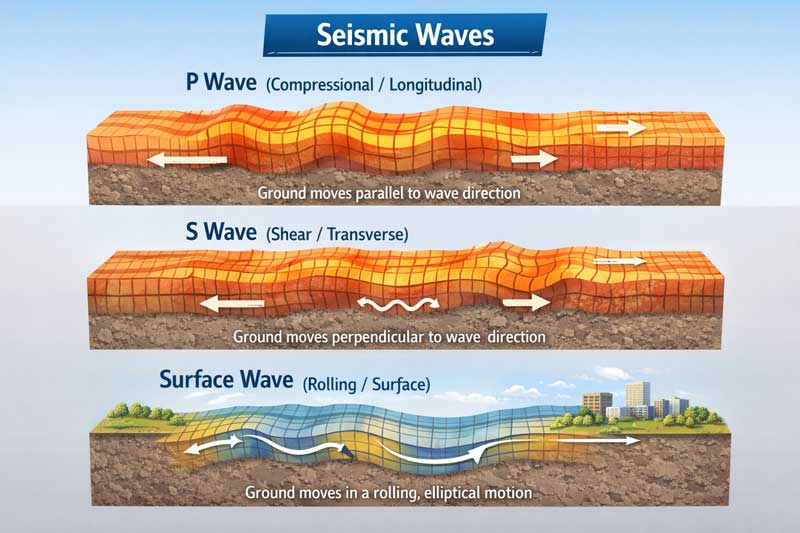
Earthquakes generate different types of waves:
- P-waves (Primary waves) – fastest, travel through solids and liquids
- S-waves (Secondary waves) – slower, travel only through solids
- Surface waves – cause the most damage
How Are Earthquakes Measured?
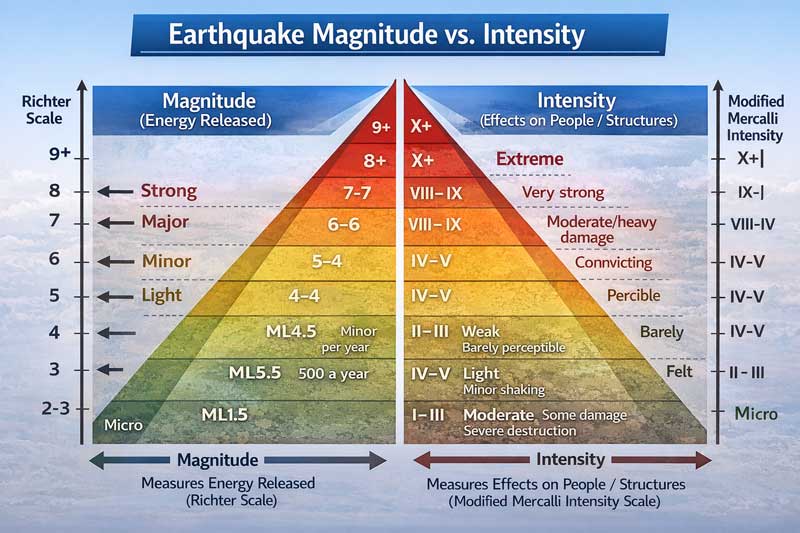
Earthquakes are measured using magnitude and intensity scales.
Magnitude
Measures the energy released:
- Richter Scale (older)
- Moment Magnitude Scale (modern standard)
Intensity
Measures the effects on people and structures:
- Modified Mercalli Scale
Effects of Earthquakes
Earthquakes can cause:
- Ground shaking
- Building collapse
- Landslides
- Tsunamis
- Infrastructure damage
- Loss of life
The severity depends on magnitude, depth, and location.
Earthquakes and Tsunamis
Underwater earthquakes can trigger massive ocean waves called tsunamis.
These waves travel across oceans and can cause severe coastal destruction.
Can Earthquakes Be Predicted?
Currently, earthquakes cannot be predicted with exact timing.
However, scientists can:
- Identify high-risk zones
- Monitor seismic activity
- Provide early warning systems
Earthquake Safety Tips
Before:
- Secure heavy objects
- Prepare emergency kits
During:
- Drop, Cover, and Hold On
- Stay away from windows
After:
- Check for injuries
- Avoid damaged structures
Where Do Earthquakes Occur Most?
Earthquakes are most common along tectonic plate boundaries:
- Pacific Ring of Fire
- California (San Andreas Fault)
- Japan
- Alaska
Earthquake Monitoring and Tracking
Scientists use advanced tools like seismographs and satellite systems to monitor earthquakes worldwide.
Real-time earthquake tracking helps in disaster response and public awareness.
Conclusion
Earthquakes are a natural result of Earth’s dynamic structure. While they cannot be prevented, understanding how they occur and preparing for them can significantly reduce their impact.
This pillar page serves as your complete guide to earthquakes, with detailed articles linked throughout for deeper understanding.
Frequently Asked Questions About Earthquakes
Most earthquakes occur along tectonic plate boundaries, especially in regions like the Pacific Ring of Fire, California, Japan, and Alaska, where plate movement is very active.
The safest action is to Drop, Cover, and Hold On. Stay away from windows, protect your head, and remain indoors until the shaking stops.
The epicenter is the point on the Earth’s surface directly above where the earthquake starts inside the ground (the focus).
No. Many earthquakes are too small to be felt and cause no damage. Only stronger earthquakes can lead to significant destruction.
The strongest recorded earthquake was the 1960 Valdivia earthquake in Chile, with a magnitude of 9.5.