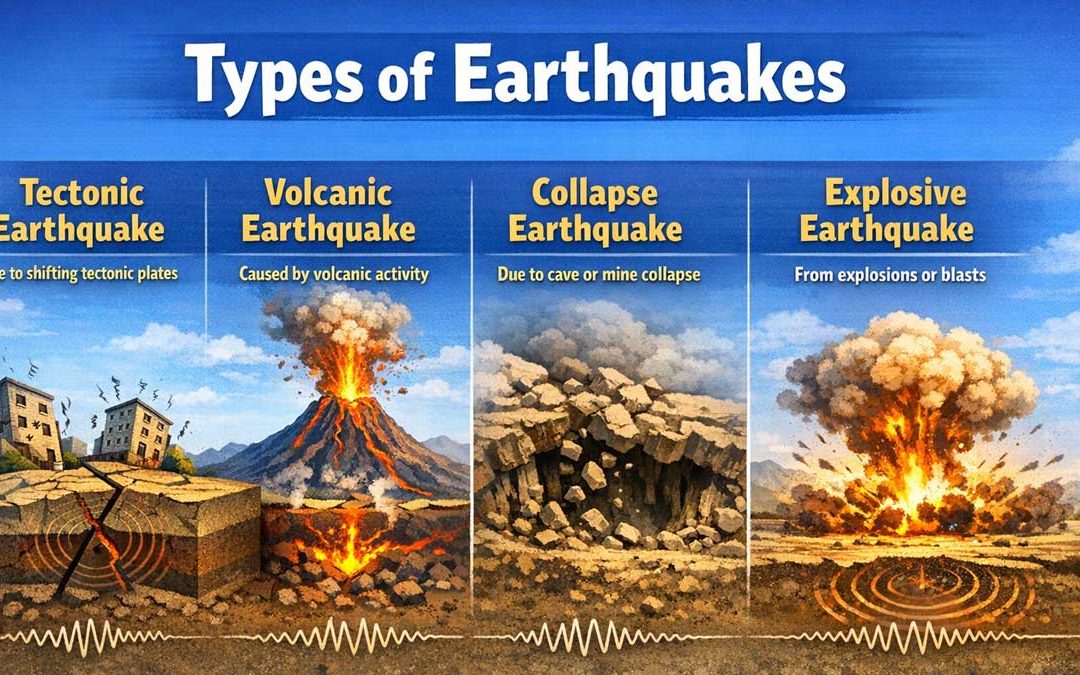
Earthquakes are not all the same. They can occur for different reasons and in different environments. Scientists classify earthquakes into several types based on how they are caused and where they occur.
Understanding the types of earthquakes helps us better predict where they might happen and how dangerous they could be.
Tectonic Earthquakes (Most Common)
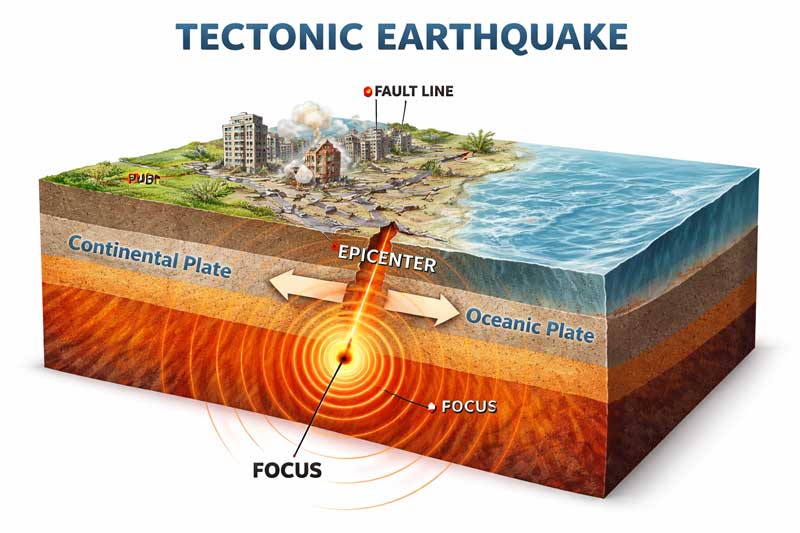
Tectonic earthquakes are the most common type and occur due to the movement of tectonic plates.
As plates move:
- they collide
- they pull apart
- they slide past each other
This movement creates stress in the Earth’s crust. When the stress is released, an earthquake occurs.
These earthquakes are responsible for most of the major earthquakes around the world.
👉 Related: what causes earthquakes
👉 Learn more: what is an earthquake
Volcanic Earthquakes
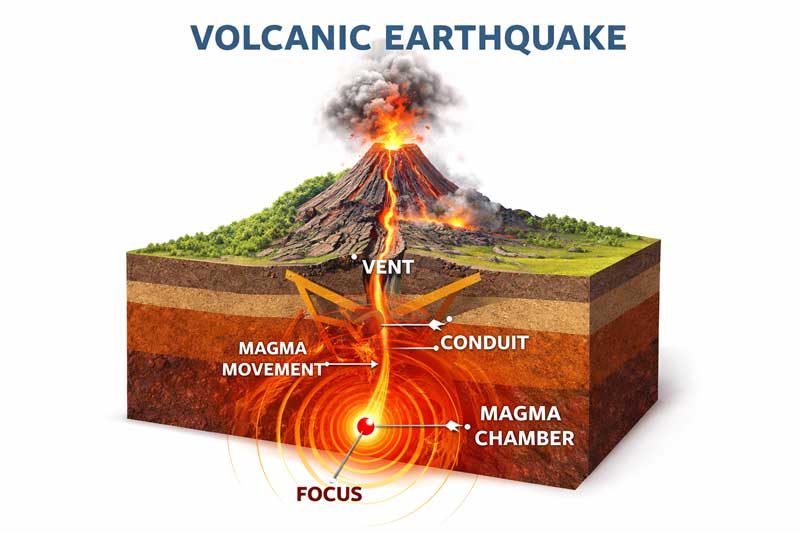
Volcanic earthquakes are caused by the movement of magma beneath the Earth’s surface.
As magma rises:
- it creates pressure
- it fractures surrounding rock
- it causes small earthquakes
These earthquakes are often warning signs of volcanic eruptions.
They are common in regions like:
- Japan
- Indonesia
- Iceland
Collapse Earthquakes
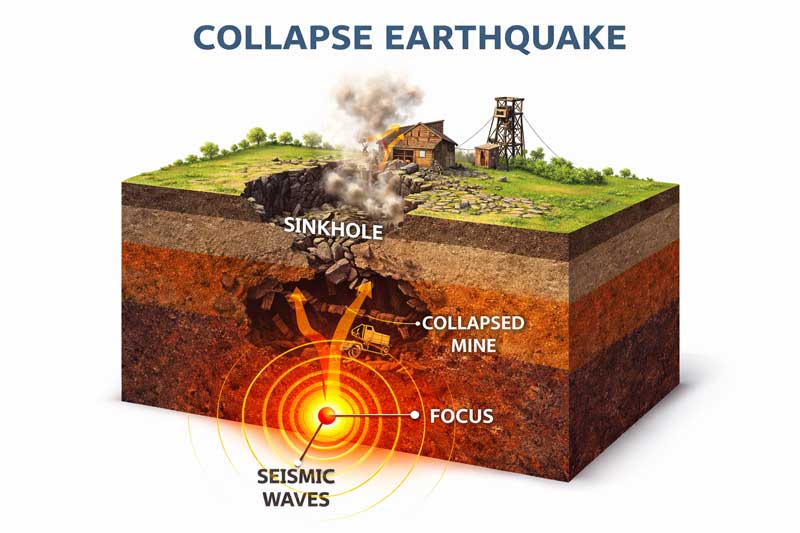
Collapse earthquakes occur when underground cavities collapse.
These are usually caused by:
- cave collapses
- underground mining
- weakened rock structures
They are generally small and localized but can still be dangerous in mining areas.
Explosion-Induced Earthquakes
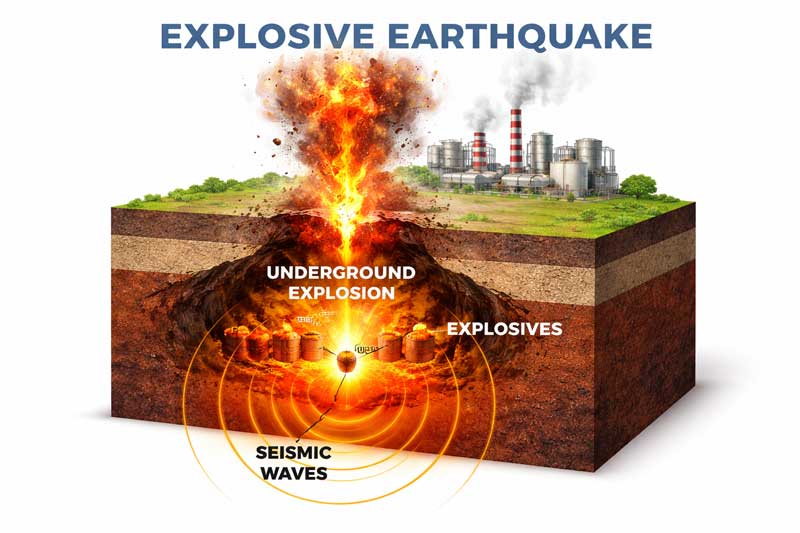
These earthquakes are caused by human activities such as explosions.
Examples include:
- nuclear tests
- blasting in mining
- large construction explosions
They are usually shallow and limited in size but can still be detected by seismic instruments.
Induced Earthquakes (Human Activity)
Some earthquakes are triggered indirectly by human activities.
These include:
- oil and gas extraction
- hydraulic fracturing (fracking)
- reservoir filling behind dams
- geothermal energy projects
Although typically smaller, induced earthquakes have become more common in certain regions.
Shallow vs Deep Earthquakes
Earthquakes can also be classified based on depth:
- Shallow earthquakes (0–70 km) → most destructive
- Intermediate earthquakes (70–300 km)
- Deep earthquakes (300–700 km)
Shallow earthquakes cause the most damage because they are closer to the Earth’s surface.
Why Understanding Earthquake Types Matters
Different types of earthquakes have different impacts.
For example:
- tectonic earthquakes can be very powerful
- volcanic earthquakes may signal eruptions
- induced earthquakes can be controlled or reduced
By understanding the type, scientists can better assess risks and take precautions.
Simple Summary of Earthquake Types
In simple terms:
- Tectonic → caused by plate movement
- Volcanic → caused by magma movement
- Collapse → caused by underground collapse
- Explosion → caused by blasts
- Induced → caused by human activity
Conclusion
Earthquakes can happen for many reasons, but all of them involve the sudden release of energy inside the Earth. Tectonic earthquakes are the most common and powerful, while others like volcanic or induced earthquakes occur under specific conditions.
Understanding these types helps scientists monitor earthquake activity and improve safety measures around the world.
To understand the full picture, explore our complete earthquakes guide and related topics.
Frequently Asked Questions
Tectonic earthquakes are the most common and occur due to tectonic plate movement.
They are usually smaller, but they can signal volcanic eruptions, which may be dangerous.
Induced earthquakes are caused by human activities such as drilling, mining, or reservoir filling.
Shallow tectonic earthquakes cause the most damage because they occur close to the surface.