 Petroleum is an essential fossil fuel composed of a natural mixture of hydrocarbons, including crude oil, natural gas, and asphalt. Its form can range from gas to solid, influenced by the complexity of its carbon structure. This resource is crucial for energy...
 Conglomerate is a sedimentary rock formed from rounded pebbles or clasts held together by a finer matrix. Its classification depends on pebble composition, sorting, and matrix abundance. Well-sorted conglomerates signify gradual deposition by water currents, while...
 Gravel: Gravel is an unconsolidated accumulation of rounded fragments greater than 2 mm in diameter. Wentworth (1922) classified gravel into four types on the basis of size (diameter in mm) (a)...
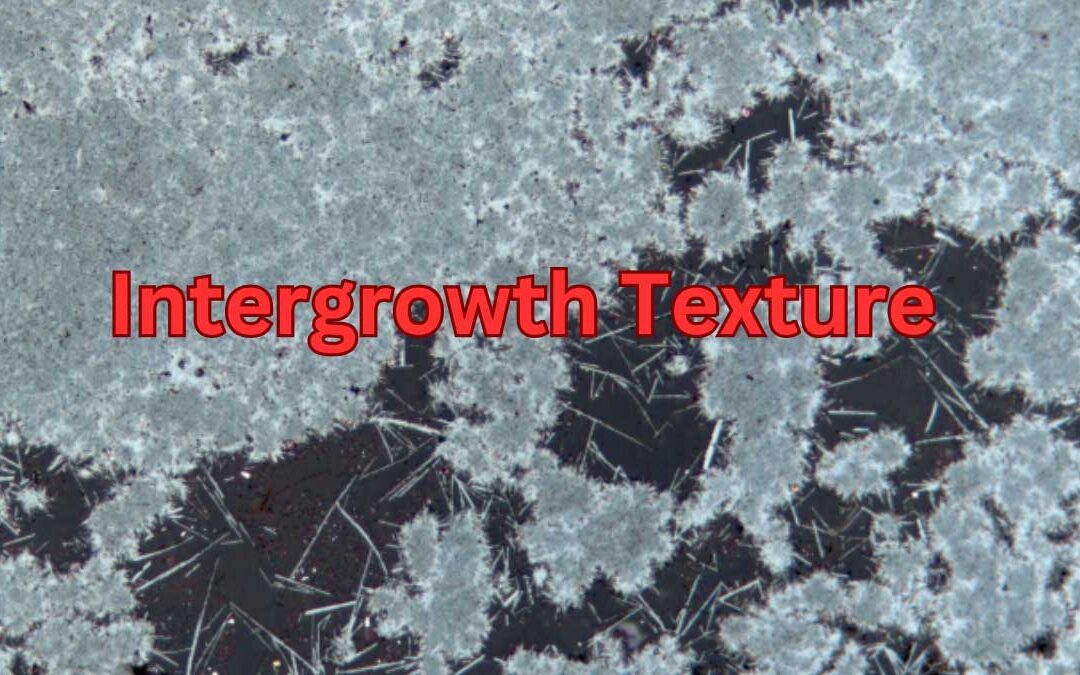 Intergrowth texture forms when two minerals crystallize together or through exsolution in igneous rocks. Common types include graphic, myrmekite, exsolution, cavity, radiate, reaction, and pegmatite textures, each revealing mineral interactions and cooling history....
 Types of Metamorphic Texture form due to varying pressure and temperature conditions. They are classified into foliated (slaty, schistose, phyllitic, gneissic) and non-foliated (granulose, mylonitic, hornfelsic) textures. Other textures like augen, porphyroblastic,...
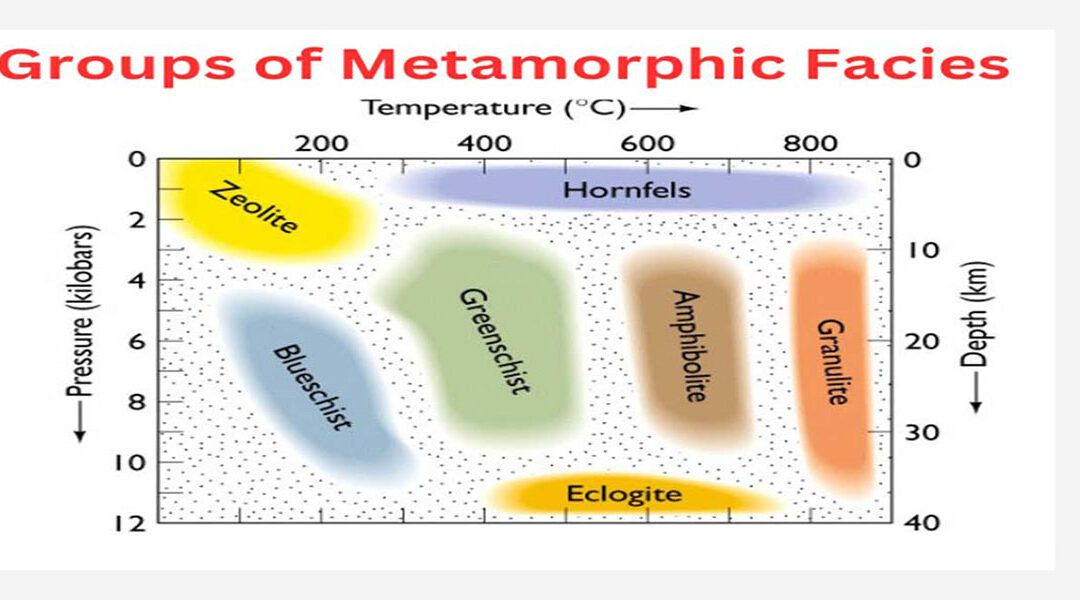 What are Metamorphic Facies? A metamorphic facies consists of metamorphic mineral assemblages that repeatedly develop in rocks with various bulk chemical compositions across different locations and times, reflecting specific metamorphic conditions. If a rock forms...
